


Starting Fresh
A new brand, a new product or a site that has outgrown its first build. We start from your content and your goals, design a theme around them and build only what the site needs, so there is nothing to strip out later.
[WordPress Development]
AppVertices builds WordPress sites that load fast, stay secure and are easy for your own team to run — custom themes and plugins, WooCommerce stores, headless builds and integrations, handed over with the documentation to maintain them.
A WordPress site is easy to start and easy to get wrong. The theme that looks right on launch day, the dozen plugins that each solve one problem, and the hosting nobody reviewed are what make a site slow, fragile and expensive to change a year later. We build it the other way round: the content model first, then a theme and the few plugins that earn their place, with the editing experience your team will live in designed on purpose.
You get a named engineer, a written scope and a staging site you can click through at every stage — and the code, the credentials and the documentation are yours from day one.
01
One accountable team from discovery to handover
02
Every plugin and theme reviewed before it ships
03
Your site, your hosting and your repository
Off-the-shelf themes and a stack of plugins get a site live quickly. Custom work earns its cost when the site has to do something specific, carry real traffic, or be maintained by people who are not developers. Three situations where we usually recommend it.
A new brand, a new product or a site that has outgrown its first build. We start from your content and your goals, design a theme around them and build only what the site needs, so there is nothing to strip out later.
Your site works but it is slow, hard to edit or looks dated. We audit the theme, the plugins and the hosting, fix what is actually slowing it down, and rebuild the parts that cannot be fixed — without taking the live site offline.
A booking flow, a members area, a product configurator, a connection to your CRM. When a plugin almost does it, we build the version that does exactly it, as code your team owns rather than a subscription that can change.




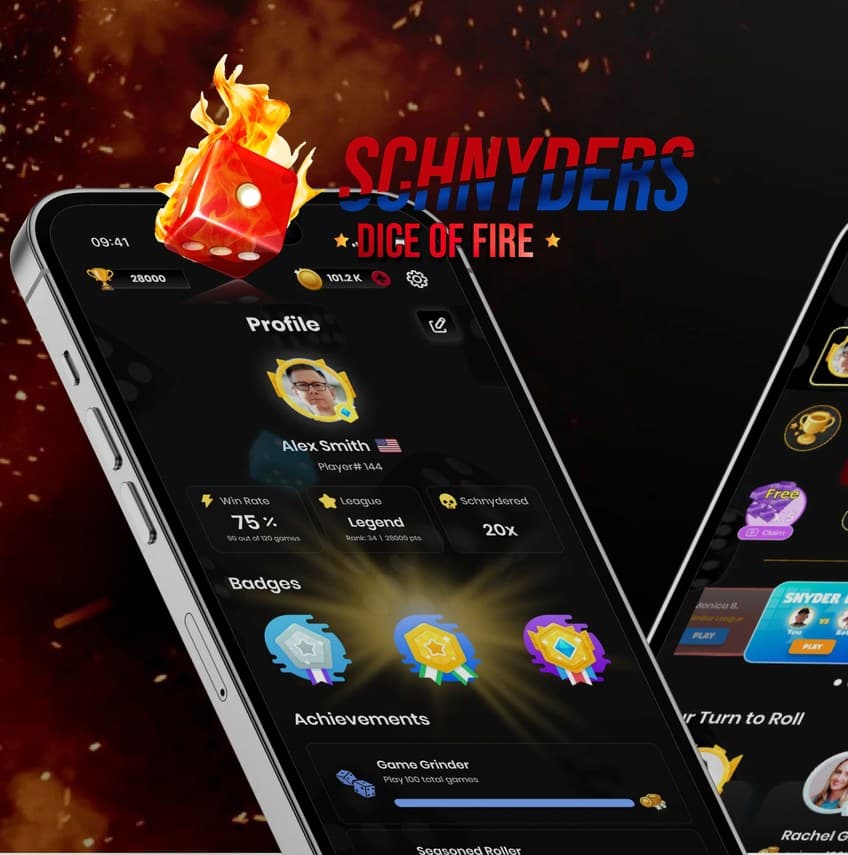
Two recent builds from our case-study library — not WordPress projects, but a fair picture of how we scope, build and hand over a product.
Real-time matches needed synchronized gameplay so every player saw the same outcome without noticeable delay. Private games needed invite-based access, matchmaking had to pair live opponents, and tournaments added tokens and leaderboards on top.
A Flutter frontend with Node.js and WebSockets behind it keeps gameplay events synchronized across connected players, while one backend connects accounts, competition, tokens and administration.
Florida homeowners needed a faster way to understand what insurance would cost, and agents needed more relevant leads. One platform had to serve both sides, account for county-level differences, and keep every estimate clearly informational.
We mapped the journey from property details to estimate to quote request, then built a lead system that organizes requests by county. Shipped across web, iOS and Android on one backend.

Six stages, each with something you can look at before we move on. You see the theme in a browser at stage three, on a staging site that is a copy of what will go live, not in a slide deck about it.
We start with your goals, your audience and the content you already have. You leave with a sitemap, a content model, a plugin shortlist and a written scope — and a list of what we have deliberately left out.
Layouts for the templates that matter, in the real type and colour of your brand, reviewed on a phone before a desktop. The editing screens are designed too, because that is where your team will spend its time.
A custom theme and the smallest set of plugins that does the job, built to WordPress coding standards with each feature behind a switch you can turn off. Builds land on a staging site you can review as we go.
Real browsers and real phones, editor accounts as well as visitor ones, plus accessibility, page-speed and security passes. Forms, checkouts and redirects are tested end to end, not assumed.
A launch checklist run on a rehearsal first: redirects mapped, backups taken, caching and monitoring set up, and a rollback ready. Launch happens at a time that suits your traffic, not ours.
A written agreement that names what is covered — updates, backups, security monitoring, small changes — and how fast we respond. You hold the repository and the logins throughout, so leaving is always possible.
Recognized for delivering high-quality software, mobile applications, and digital products that help businesses turn ideas into working technology. Our achievements reflect the experience, technical expertise, and commitment behind the products we build for startups, growing businesses, and established organizations.
America's Fastest Growing Companies
America's Fastest Growing Top Web Development Agencies 2023
Silver Awards Winner 2020

Top 1000 Companies

Top Mobile App Development Company 2023
Top Entertainment App Developers

Best Mobile App Developer
Top App Development Companies
Web Excellence Awards
Top Entertainment App Developers
Excellence in Web Creativity & Digital Communication
800+
Successful Projects
98%
Client Satisfaction
500+
Professionals
10+ Yrs
Of Experience
A published review from a client, on Clutch where it can be read in full and checked. It is a mobile project, not a WordPress one; it is here because it is how our clients describe working with us.
$10,000 to $49,999
Dec 2024 – Sep 2025
Mobile app development for a retail chain in the weight-loss supplements market, from scope through release.
5.0
Quality
5.0
Schedule
5.0
Cost
5.0
Refer
5.0
“They really took the time to understand our business, our customer base, and our goals.”
Published on Clutch, where the full review and its ratings can be read in context.
President, Supplement King
Canada
11-50 Employees
Verified
From a single custom theme to a multi-site build with its own plugins and integrations, these are the engagements we take on. Drag the row to see all eight.
Websites built around your content and your workflow rather than a template's. Custom post types, tidy admin screens and a front end that your editors can change without calling us.
A theme written from your design — fast, accessible, responsive and free of the page-builder weight that slows most sites down. Built with the block editor so layouts stay flexible.
WordPress as the content system for a site, an intranet or a publishing operation: roles and permissions, editorial workflows, structured content and a clean path from draft to live.
Multisite networks, single sign-on, staging and release pipelines, and the security review a larger organisation needs. We build for several teams editing at once and for traffic that spikes.
WooCommerce stores with custom product types, shipping and tax rules, payment gateways and the admin tools your operations team needs — tested through a real checkout before launch.
A plugin for the one thing no existing plugin does well: written to WordPress standards, documented, versioned and owned by you, so it does not disappear when a vendor changes direction.
Your CRM, payments, ERP, marketing tools and booking systems connected to the site, with errors logged and retried rather than lost, and the data flowing both ways where it needs to.
Moving a site from another platform, another host or an older WordPress — content, media, users and redirects — with the old site kept live until the new one has been checked page by page.
WordPress runs everything from a clinic's appointment pages to a catalogue of thousands of products. These are six sectors where we have built, and where the content structure and compliance needs shape the site.






We design the site and build it ourselves, so what is approved in a mockup is what ships — not an approximation produced by a second team that never met the first.
Every build starts from the content: what your visitors need to find, what your editors need to change, and how the two stay in step as the site grows over the years.
We keep to a short list of well-maintained plugins and write the rest ourselves, which keeps the site fast and the update path boring.
That discipline is mostly invisible when it works. It shows up as pages that load quickly on a phone, an admin screen your team is not afraid of, and updates that go through on a Tuesday afternoon without anyone holding their breath. And because the code, the content and the hosting accounts are in your name, you are never locked in to us.

What changes when the people building your site do this every week: fewer surprises in the build, a site that is quicker to load and cheaper to keep, and a team that can tell you plainly when a requirement is a bad idea.
Current WordPress, the block editor and a build pipeline, rather than a theme from five years ago with plugins bolted on. The site stays upgradeable as WordPress itself moves.
Built around the way your team publishes and your customers browse. Where a plugin fits, we use it; where it does not, we say so and build the part that does.
Caching, image handling and database queries set up for the traffic you want, not the traffic you have today, so a good month does not become a slow one.
A staging site from the first week, a written scope, and a running list of decisions and their reasons. You can see what we are doing without asking.
WordPress is not the right answer to every web project, but for most business sites it is a strong one. These are the reasons we most often give when a client asks whether it is the right foundation.
Themes, blocks and plugins let a site be shaped to the business instead of the reverse, and custom code can sit alongside them where a requirement is unusual.
Editors work in a familiar interface and can publish and change pages themselves. A well-built admin keeps that simple instead of exposing every setting.
Clean markup, control over titles, descriptions, structured data and redirects, and fast pages when the theme is built well — the technical groundwork search needs.
From a five-page site to a large publication or store, with caching, a CDN and sensible hosting. Multisite covers several brands or regions from one installation.
The software is free and the talent pool is wide, so the cost goes into design and build rather than licences. Ownership stays with you, which keeps future costs predictable.
Responsive layouts are the starting point rather than an extra: tested on real phones and tablets, with images and fonts loaded for small screens first.
It depends on what is being built. A site on a custom theme with a modest number of templates takes a matter of weeks; a WooCommerce store, a multisite network or a build with several integrations takes longer. After discovery you get a stage-by-stage schedule in writing, and you review a working staging site at each stage rather than waiting for a launch date.
Tell us what you are building, who it is for and when it needs to be live. You will get a written scope, a realistic range, and a named engineer on the call rather than a sales deck.

[WordPress Development]
AppVertices builds WordPress sites that load fast, stay secure and are easy for your own team to run — custom themes and plugins, WooCommerce stores, headless builds and integrations, handed over with the documentation to maintain them.
A WordPress site is easy to start and easy to get wrong. The theme that looks right on launch day, the dozen plugins that each solve one problem, and the hosting nobody reviewed are what make a site slow, fragile and expensive to change a year later. We build it the other way round: the content model first, then a theme and the few plugins that earn their place, with the editing experience your team will live in designed on purpose.
You get a named engineer, a written scope and a staging site you can click through at every stage — and the code, the credentials and the documentation are yours from day one.
01
One accountable team from discovery to handover
02
Every plugin and theme reviewed before it ships
03
Your site, your hosting and your repository
Off-the-shelf themes and a stack of plugins get a site live quickly. Custom work earns its cost when the site has to do something specific, carry real traffic, or be maintained by people who are not developers. Three situations where we usually recommend it.
A new brand, a new product or a site that has outgrown its first build. We start from your content and your goals, design a theme around them and build only what the site needs, so there is nothing to strip out later.
Your site works but it is slow, hard to edit or looks dated. We audit the theme, the plugins and the hosting, fix what is actually slowing it down, and rebuild the parts that cannot be fixed — without taking the live site offline.
A booking flow, a members area, a product configurator, a connection to your CRM. When a plugin almost does it, we build the version that does exactly it, as code your team owns rather than a subscription that can change.










Two recent builds from our case-study library — not WordPress projects, but a fair picture of how we scope, build and hand over a product.
Real-time matches needed synchronized gameplay so every player saw the same outcome without noticeable delay. Private games needed invite-based access, matchmaking had to pair live opponents, and tournaments added tokens and leaderboards on top.
A Flutter frontend with Node.js and WebSockets behind it keeps gameplay events synchronized across connected players, while one backend connects accounts, competition, tokens and administration.
View Case StudyFlorida homeowners needed a faster way to understand what insurance would cost, and agents needed more relevant leads. One platform had to serve both sides, account for county-level differences, and keep every estimate clearly informational.
We mapped the journey from property details to estimate to quote request, then built a lead system that organizes requests by county. Shipped across web, iOS and Android on one backend.
View Case StudySix stages, each with something you can look at before we move on. You see the theme in a browser at stage three, on a staging site that is a copy of what will go live, not in a slide deck about it.
We start with your goals, your audience and the content you already have. You leave with a sitemap, a content model, a plugin shortlist and a written scope — and a list of what we have deliberately left out.
Layouts for the templates that matter, in the real type and colour of your brand, reviewed on a phone before a desktop. The editing screens are designed too, because that is where your team will spend its time.
A custom theme and the smallest set of plugins that does the job, built to WordPress coding standards with each feature behind a switch you can turn off. Builds land on a staging site you can review as we go.
Real browsers and real phones, editor accounts as well as visitor ones, plus accessibility, page-speed and security passes. Forms, checkouts and redirects are tested end to end, not assumed.
A launch checklist run on a rehearsal first: redirects mapped, backups taken, caching and monitoring set up, and a rollback ready. Launch happens at a time that suits your traffic, not ours.
A written agreement that names what is covered — updates, backups, security monitoring, small changes — and how fast we respond. You hold the repository and the logins throughout, so leaving is always possible.
Recognized for delivering high-quality software, mobile applications, and digital products that help businesses turn ideas into working technology. Our achievements reflect the experience, technical expertise, and commitment behind the products we build for startups, growing businesses, and established organizations.
America's Fastest Growing Companies
America's Fastest Growing Top Web Development Agencies 2023
Silver Awards Winner 2020
Top 1000 Companies
Top Mobile App Development Company 2023
Top Entertainment App Developers
Best Mobile App Developer
Top App Development Companies
Web Excellence Awards
Top Entertainment App Developers
Excellence in Web Creativity & Digital Communication
800+
Successful Projects
98%
Client Satisfaction
500+
Professionals
10+ Yrs
Of Experience
A published review from a client, on Clutch where it can be read in full and checked. It is a mobile project, not a WordPress one; it is here because it is how our clients describe working with us.
“They really took the time to understand our business, our customer base, and our goals.”
Published on Clutch, where the full review and its ratings can be read in context.
- President, Supplement King, Canada
See Full ReviewFrom a single custom theme to a multi-site build with its own plugins and integrations, these are the engagements we take on.
Websites built around your content and your workflow rather than a template's. Custom post types, tidy admin screens and a front end that your editors can change without calling us.
A theme written from your design — fast, accessible, responsive and free of the page-builder weight that slows most sites down. Built with the block editor so layouts stay flexible.
WordPress as the content system for a site, an intranet or a publishing operation: roles and permissions, editorial workflows, structured content and a clean path from draft to live.
Multisite networks, single sign-on, staging and release pipelines, and the security review a larger organisation needs. We build for several teams editing at once and for traffic that spikes.
WooCommerce stores with custom product types, shipping and tax rules, payment gateways and the admin tools your operations team needs — tested through a real checkout before launch.
A plugin for the one thing no existing plugin does well: written to WordPress standards, documented, versioned and owned by you, so it does not disappear when a vendor changes direction.
Your CRM, payments, ERP, marketing tools and booking systems connected to the site, with errors logged and retried rather than lost, and the data flowing both ways where it needs to.
Moving a site from another platform, another host or an older WordPress — content, media, users and redirects — with the old site kept live until the new one has been checked page by page.
WordPress runs everything from a clinic's appointment pages to a catalogue of thousands of products. These are six sectors where we have built, and where the content structure and compliance needs shape the site.
A storefront has to behave the same on both stores and stay fast on a mid-range Android. Flutter draws its own widgets, so the product grid, the cart and the checkout are identical on every device, and the catalogue, payments and stock stay wired to the systems the business already runs.
Consultation, scheduling and records in one codebase, with the parts that have to be native kept native. Encrypted local storage, biometric sign-in and an audit trail go in from the schema up, and applicable healthcare compliance is treated as a constraint on the design rather than a review at the end.
Onboarding, verification, transfers and statements, built once and shipped to both stores. Secure storage, device binding and certificate pinning are architecture rather than an afterthought, and the pieces that need platform-level key storage are written natively and called from Flutter.
Two apps and a dispatcher on one codebase: the customer's order, the driver's route and the operator's board. Live location, offline queues and background updates are the hard part, so we design for a dropped signal and a locked screen first and let the rest fall out of that.
Search, shortlist, viewings and the paperwork behind them. Listing media is heavy, so the image pipeline, the map and the saved-search sync are built for a phone on mobile data, and the portal, CRM and document store the agency already uses stay the source of truth.
Approvals, dashboards and field entry extended to a phone without a second codebase to maintain. SSO, device policy and role-based access are handled on day one, and the app talks to the ERP, CRM and internal services through authenticated APIs rather than a bespoke mobile backend.
We design the site and build it ourselves, so what is approved in a mockup is what ships — not an approximation produced by a second team that never met the first.
Every build starts from the content: what your visitors need to find, what your editors need to change, and how the two stay in step as the site grows over the years.
We keep to a short list of well-maintained plugins and write the rest ourselves, which keeps the site fast and the update path boring.
That discipline is mostly invisible when it works. It shows up as pages that load quickly on a phone, an admin screen your team is not afraid of, and updates that go through on a Tuesday afternoon without anyone holding their breath. And because the code, the content and the hosting accounts are in your name, you are never locked in to us.
What changes when the people building your site do this every week: fewer surprises in the build, a site that is quicker to load and cheaper to keep, and a team that can tell you plainly when a requirement is a bad idea.
Current WordPress, the block editor and a build pipeline, rather than a theme from five years ago with plugins bolted on. The site stays upgradeable as WordPress itself moves.
Built around the way your team publishes and your customers browse. Where a plugin fits, we use it; where it does not, we say so and build the part that does.
Caching, image handling and database queries set up for the traffic you want, not the traffic you have today, so a good month does not become a slow one.
A staging site from the first week, a written scope, and a running list of decisions and their reasons. You can see what we are doing without asking.
WordPress is not the right answer to every web project, but for most business sites it is a strong one. These are the reasons we most often give when a client asks whether it is the right foundation.
Themes, blocks and plugins let a site be shaped to the business instead of the reverse, and custom code can sit alongside them where a requirement is unusual.
Editors work in a familiar interface and can publish and change pages themselves. A well-built admin keeps that simple instead of exposing every setting.
Clean markup, control over titles, descriptions, structured data and redirects, and fast pages when the theme is built well — the technical groundwork search needs.
From a five-page site to a large publication or store, with caching, a CDN and sensible hosting. Multisite covers several brands or regions from one installation.
The software is free and the talent pool is wide, so the cost goes into design and build rather than licences. Ownership stays with you, which keeps future costs predictable.
Responsive layouts are the starting point rather than an extra: tested on real phones and tablets, with images and fonts loaded for small screens first.
It depends on what is being built. A site on a custom theme with a modest number of templates takes a matter of weeks; a WooCommerce store, a multisite network or a build with several integrations takes longer. After discovery you get a stage-by-stage schedule in writing, and you review a working staging site at each stage rather than waiting for a launch date.
Yes, under a written agreement that names what is covered — core, theme and plugin updates, backups, security monitoring and small content or design changes — and how quickly we respond. You hold the repository, the hosting account and the logins throughout, so you can bring support in-house or move it at any time.
Usually, yes. We begin with an audit of the theme, the plugins, the hosting and the content, and tell you what is worth keeping. Sometimes the answer is a targeted clean-up; sometimes it is a rebuild of the theme with the content carried across. We say which, and why, before any work is priced.
Fixed-scope work is quoted as a range after discovery, once we know the templates, the features and the integrations involved. Work that is still taking shape is run in short, reviewed stages on a time-and-materials basis with a cap you agree in advance. Either way the quote lists what is in and what is out.
Yes — WooCommerce stores with custom rules, multisite networks, membership and booking systems, single sign-on, and sites connected to a CRM or an ERP. Complex builds get a written technical plan up front covering hosting, security, performance and how the work will be tested, so the risky parts are dealt with first.