Introduction
Houston’s technology ecosystem has always evolved differently than most U.S. tech hubs. Rather than chasing trends for attention, the city builds software to solve real operational problems—across energy, healthcare, logistics, commerce, and enterprise infrastructure. As 2026 approaches, this practical mindset is shaping which mobile app features gain adoption, which platforms mature, and which development decisions actually hold up under pressure.
Instead of asking “What’s new?”, Houston teams are shifting their mindset toward building systems that continue to work as demand increases.. As a result, mobile applications in the region are becoming faster, smarter, more secure, and more deeply integrated into business operations. Consequently, success in 2026 will depend less on novelty and more on thoughtful system design, usability, and adaptability.
This article explores the mobile app features and platforms gaining real momentum in Houston—why they matter, how they’re being implemented, and what businesses should consider when planning their next product phase.
Why Houston’s App Ecosystem Looks Different From Other Tech Markets
Unlike consumer-first tech cities, Houston is shaped by industries where downtime, data errors, and inefficiency are expensive. Therefore, mobile apps here are often tied directly to operational outcomes—reducing friction, improving visibility, and supporting distributed teams.
Because of this, Houston businesses prioritize:
- reliability over rapid experimentation
- integration over isolated features
- scalability over short-term growth hacks
As a result, mobile apps in Houston increasingly focuses on apps that support real workflows rather than vanity metrics.
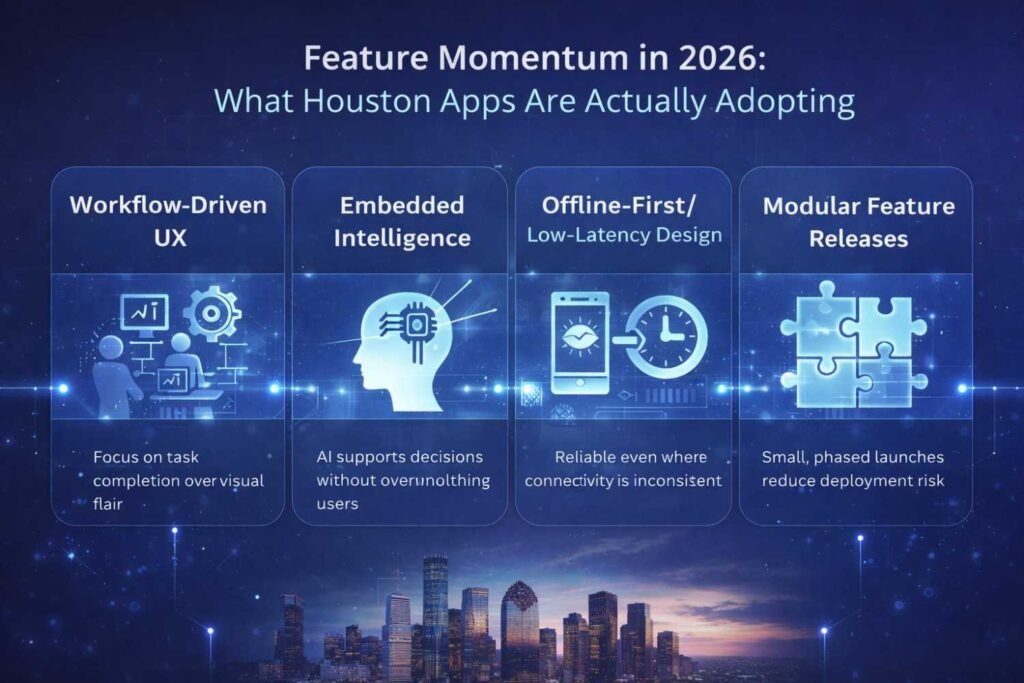
Feature Momentum in 2026: What Houston Apps Are Actually Adopting
Workflow-Driven UX (Not Just “Nice” Interfaces)
While clean design still matters, Houston apps in 2026 emphasize task completion over visual flair. Users expect apps that:
- reduce steps
- surface the right data at the right time
- adapt to role-based usage
Therefore, UX patterns are shifting toward:
- contextual navigation
- progressive disclosure
- role-aware dashboards
Instead of impressing users visually, apps now win by saving time.
Embedded Intelligence, Not “AI Everywhere”
Houston companies are adopting AI carefully. Rather than flooding apps with experimental features, teams focus on targeted intelligence that supports decisions.
For example:
- demand forecasting inside logistics apps
- anomaly detection in operations dashboards
- predictive maintenance alerts
As a result, many teams integrate AI through focused use cases supported by ai development, where models enhance workflows rather than distract from them.
Offline-First and Low-Latency Design
Field operations remain central to Houston’s economy. Consequently, apps must function reliably even when connectivity is inconsistent.
Momentum is building around:
- offline data capture
- background synchronization
- local caching strategies
This ensures apps remain useful in warehouses, job sites, and remote facilities.
Modular Feature Releases Over Big Launches
Instead of large, risky releases, Houston teams increasingly ship features in controlled phases. This approach:
- reduces deployment risk
- improves feedback loops
- protects uptime
As a result, feature flags and modular builds are becoming standard across production apps.
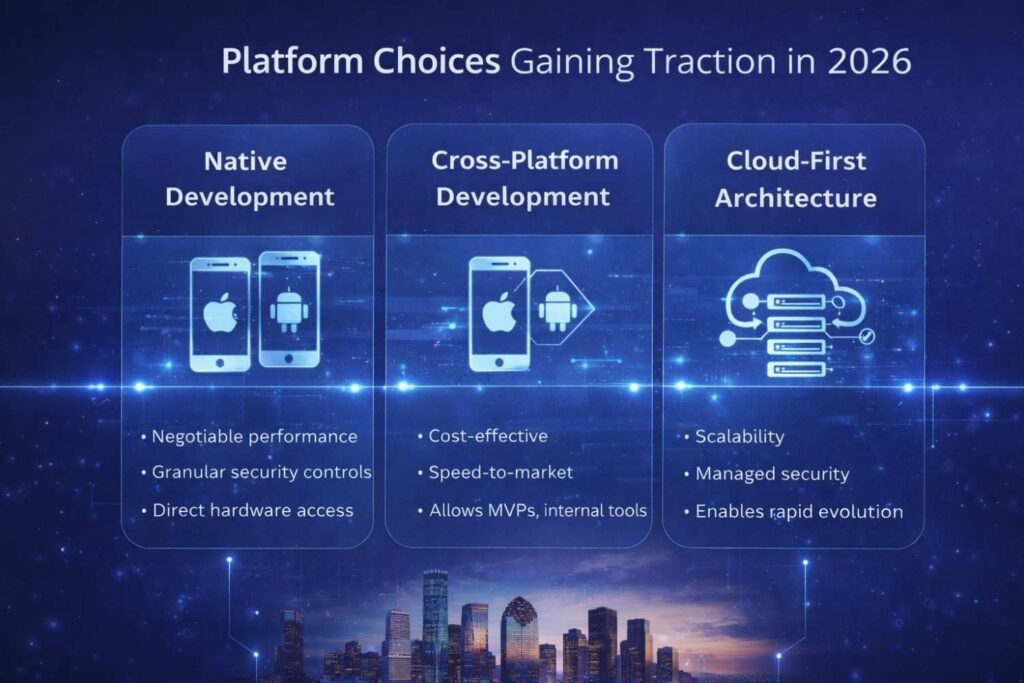
Platform Choices Gaining Traction in 2026
Native Platforms Still Matter—But With Clear Intent
iOS and Android remain critical when:
- performance is non-negotiable
- hardware access is required
- security controls must be granular
However, native builds are increasingly reserved for apps with clear long-term ownership and dedicated maintenance plans.
Cross-Platform Development Becomes the Default for Many Teams
For many Houston businesses, speed-to-market and cost efficiency matter more than platform exclusivity. Consequently, adoption of cross-platform apps continues to rise especially for:
- internal tools
- MVPs
- multi-market launches
The key difference in 2026 is discipline: teams choose cross-platform when it fits the use case, not as a blanket solution.
Cloud-First Architecture Is No Longer Optional
Modern mobile apps rely heavily on cloud services for:
- scalability
- security
- continuous updates
Therefore, Houston teams increasingly work with a cloud app development company to design backend systems that can evolve without constant rewrites.
Cloud maturity is now a baseline expectation—not a competitive edge.
Industry-Specific Momentum Across Houston
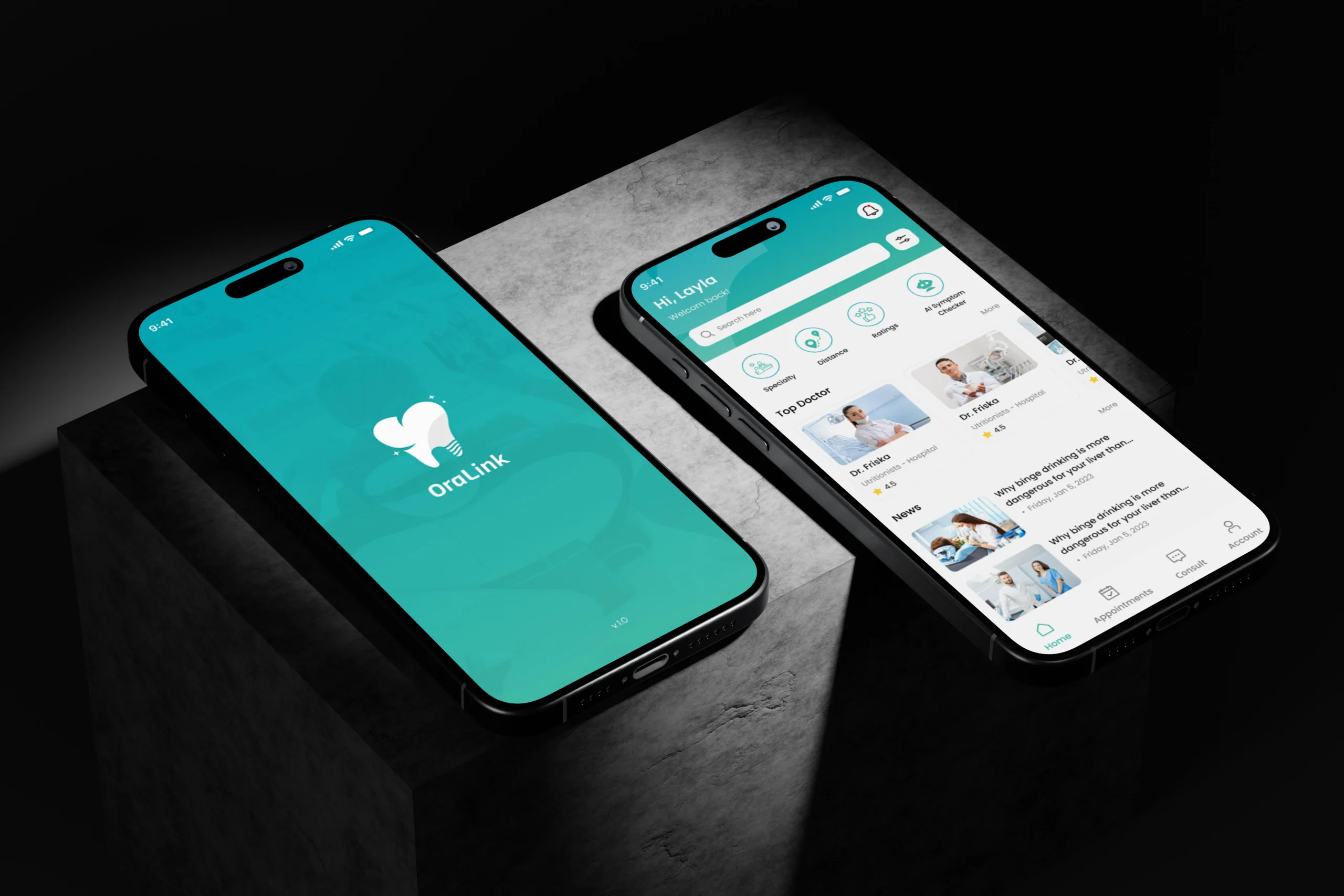
Healthcare: Security and Usability Rise Together
Healthcare apps in Houston are balancing compliance with usability. In 2026, momentum centers on:
- role-based access
- audit-friendly data flows
- patient-centric UX
Apps that ignore usability—even if compliant—struggle with adoption.
Also, For healthcare organizations evaluating regional perspectives, it can also be useful to review how mobile solutions are being approached in specific markets. Discussions around mobile app development in Dallas for healthcare, for example, highlight how security, UX design, and regulatory compliance intersect in real operational environments. Examining these localized insights helps teams compare implementation patterns, risk considerations, and design priorities when planning or refining healthcare-focused applications.
Energy and Industrial Systems Go Mobile
Energy companies increasingly rely on mobile tools for:
- asset monitoring
- compliance reporting
- workforce coordination
As a consequence, oil & gas software development is increasingly fueling the need for applications that unify sensor data, enable on-site reporting, and deliver real-time operational insights.
Commerce Expands Beyond Traditional E-Commerce
Retail and B2B sellers are adopting mobile platforms for:
- inventory visibility
- order management
- customer engagement
Instead of standalone shopping apps, many companies invest in ecommerce app development that integrates tightly with logistics, payments, and analytics.
Blockchain Finds Practical Use Cases (Without the Hype)
While blockchain isn’t used everywhere, Houston teams apply it where trust, traceability, and verification matter.
Examples include:
- supply chain tracking
- identity verification
- audit-resistant records
These implementations often involve collaboration with a blockchain app development company that understands compliance and system integration—not just decentralized concepts.
Quality Becomes a Competitive Advantage
In 2026, app quality is no longer assumed—it’s measured. Houston teams increasingly invest in:
- performance monitoring
- device compatibility testing
- regression automation
This drives demand for app quality assurance that catch issues before users do.
High-quality apps retain users longer and cost less to maintain.
Content-Driven Platforms and Custom CMS Needs
Many Houston businesses operate content-heavy platforms—internal knowledge systems, customer portals, and operational dashboards.
As a result, momentum is growing around custom cms development that:
- integrate with mobile apps
- support role-based publishing
- scale with content volume
Generic CMS tools often fail under enterprise complexity.
The Role of Development Partners in 2026
Houston companies increasingly choose partners not for speed alone, but for system thinking. A strong mobile app development company helps businesses:
- avoid architectural debt
- plan for growth
- align features with operations
Teams like App Vertices are often involved early to ensure design, engineering, and scalability move together—rather than in isolation.
What Houston Businesses Should Plan for Now
As 2026 approaches, businesses should:
- audit current app performance
- assess scalability limits
- align features with measurable outcomes
Waiting until apps break under load is no longer acceptable.
Also, As Houston-based teams look ahead to what’s possible beyond current mobile capabilities, emerging technologies like edge computing and next-generation connectivity are becoming part of long-term planning. In particular, discussions around ultra-low latency, real-time intelligence, and device-level processing are no longer theoretical. For a deeper look at how these shifts could redefine mobile experiences—from immersive interfaces to instant data-driven responses it’s worth exploring how 6G and edge AI could enable mobile app experiences that simply weren’t feasible before, especially for industries that depend on speed, precision, and continuous connectivity.
Key Takeaways for Decision-Makers
- Houston apps prioritize reliability over novelty
- Embedded intelligence beats flashy automation
- Cross-platform adoption is strategic, not default
- Cloud maturity is mandatory
- Quality and security drive long-term success
Final Thoughts
Houston’s mobile app ecosystem in 2026 is defined by maturity. Instead of chasing trends, businesses invest in platforms and features that support real work, real users, and real growth.
The apps gaining momentum aren’t just well-designed—they’re dependable, adaptable, and deeply aligned with how Houston operates.
Frequently Asked Questions – FAQs
A. Workflow efficiency, reliability, security, and integration matter more than experimental features.
A. Yes—but selectively. AI is used to enhance decisions, not overwhelm users.
A. When chosen intentionally and architected well, it can be highly effective.
A. Essential. Scalability, security, and continuous improvement depend on it.
A. Healthcare, energy, logistics, retail, and enterprise operations lead adoption.