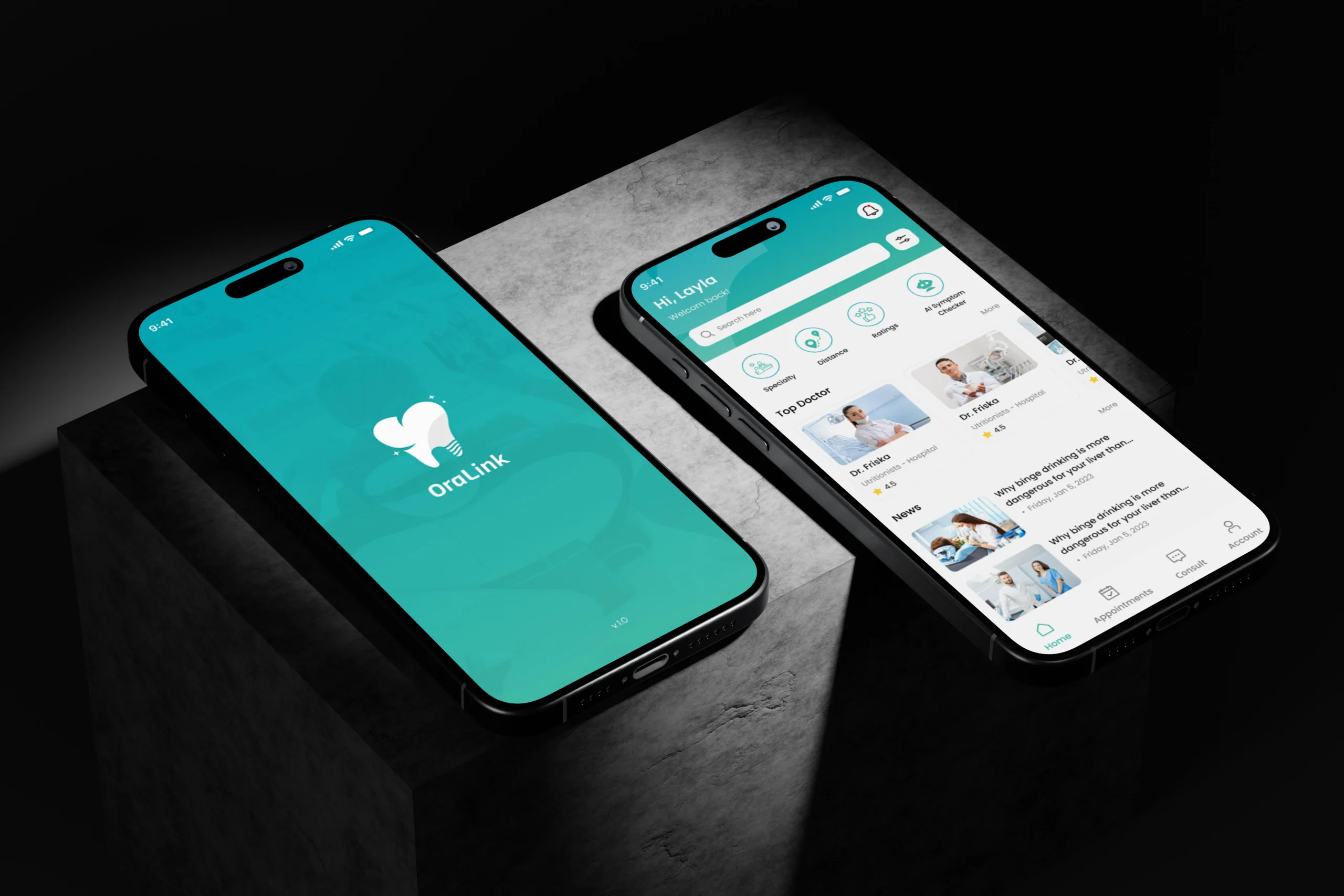
Building a Backend for a Mobile App | APIs, Databases, and Hosting
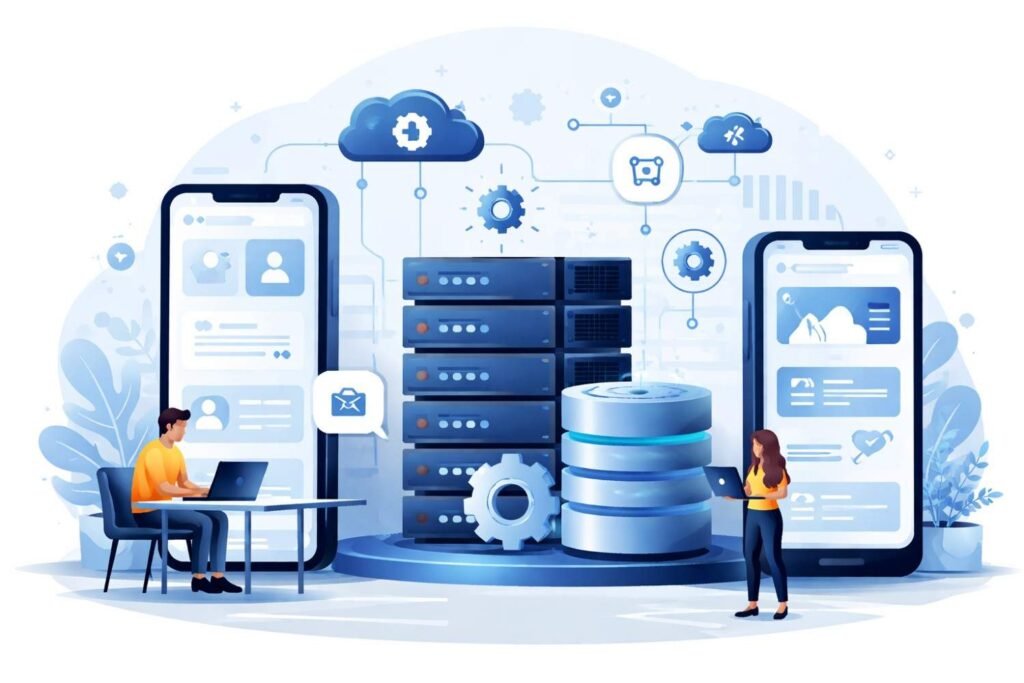
A mobile app may be what users see, but the backend often determines whether the product remains reliable after the first few hundred downloads. It handles account access, stores shared information, applies business rules, processes payments, sends notifications, and connects the app with external services. Without that supporting layer, many applications would be limited to information stored on one device. A well-designed backend in mobile apps, however, allows users to sign in from multiple devices, recover their data, receive live updates, and complete transactions securely. Building that foundation requires three major decisions: how the app communicates with the server, where its data belongs, and how the system will be hosted. Those choices should reflect the product’s actual workload rather than whichever technology is currently receiving the most attention. What Is a Mobile App Backend? A mobile backend is the server-side environment that receives requests from an application, applies product rules, interacts with stored data, and returns an appropriate response. For example, when a user books an appointment, the mobile interface collects the selected date and time. The backend then confirms that the slot is available, verifies the user’s identity, saves the reservation, notifies the provider, and sends confirmation back to the app. Android’s architecture guidance separates interface concerns from the data and business-logic layer. It also recommends using clearly defined repositories and data sources so network services, local storage, and product rules can evolve without becoming tightly attached to the screen code. A typical backend may include: Not every product needs all of these components. Nevertheless, the architecture should leave room for the functions the app genuinely expects to support. How APIs Connect the Mobile App to the Backend An application programming interface, or API, defines how the mobile client requests information or asks the backend to perform an action. The app might send a request to retrieve an account profile, create an order, upload a photo, or cancel a booking. The backend verifies the request, completes the required work, and returns a structured response. A strong API contract should define: The OpenAPI Specification provides a language-independent way to describe HTTP APIs so developers and tools can understand their available operations without examining the server’s source code. As a result, an OpenAPI document can support documentation, testing, client generation, and communication between mobile and backend teams. REST or GraphQL: Which API Style Is Better? REST commonly organizes an API around resources and HTTP endpoints. For instance, separate routes may retrieve users, create orders, or update appointments. It is widely understood, works well with HTTP infrastructure, and often provides a straightforward choice for products with clearly defined operations. GraphQL follows a different model. It uses a typed schema and allows the client to request particular fields instead of receiving a fixed response shape. It supports queries for reading data, mutations for changing it, and subscriptions for certain real-time workflows. Neither approach is automatically superior. REST may be the cleaner option when: GraphQL may be useful when: However, GraphQL does not remove backend complexity. Teams must still control permissions, query depth, resource usage, caching, and database efficiency. Therefore, the API style should follow the data-access pattern rather than developer preference alone. API Security Must Be Designed Per Request Signing in confirms who the user is. Authorization determines what that person is allowed to access or change. Both are necessary. For example, an authenticated user may request /accounts/4821. The server must verify that the user has permission to view account 4821 instead of trusting the identifier supplied by the app. OWASP lists broken object-level authorization, broken authentication, unrestricted resource consumption, security misconfiguration, and unsafe use of third-party APIs among the leading API security risks. It recommends checking object-level access whenever an endpoint uses an identifier supplied by a client. A secure API generally needs: App attestation can add another defensive layer. Firebase App Check, for example, can attach evidence that a request originated from an approved app or authentic device. However, attestation supports authentication and authorization controls; it does not replace them. Choosing a Database for a Mobile Backend Database selection should begin with the information the product manages and the guarantees it requires. A relational database organizes data into connected tables with defined relationships. PostgreSQL, MySQL, and similar systems are often appropriate for orders, payments, appointments, subscriptions, inventory, and other information that benefits from consistency and structured queries. Transactions are particularly important when several database operations must either succeed together or fail together. PostgreSQL describes a transaction as an all-or-nothing unit, which is valuable when an operation must update several records without leaving the system in a partially completed state. A document database stores records in flexible document-like structures. It may suit content feeds, user preferences, catalogs, event data, or products whose data shape changes frequently. Meanwhile, key-value stores and caches can support sessions, temporary values, rate limits, or frequently requested information. Search engines may be added when users need sophisticated full-text search, filtering, or ranking. Therefore, a production backend may use more than one storage system. Still, adding databases without a clear purpose increases operational effort. A focused relational database is often a sensible starting point for a new product because it can support a broad range of structured workflows. The Database Schema Should Reflect Business Rules A database is not simply a collection of app screens converted into tables. Suppose a marketplace has customers, sellers, products, orders, payments, refunds, and reviews. Those records have relationships and rules. A payment belongs to an order, a review should be connected to a completed purchase, and a refund must not exceed the eligible amount. The backend should protect those rules even if the mobile client sends an incorrect or manipulated request. Furthermore, teams need to plan for: The mobile app may also keep selected information locally for speed or offline use. Android’s offline-first guidance notes that devices regularly experience weak or unavailable connections, so apps may need a local source of truth and a planned method for synchronizing with network data. Authentication,
Building Investment Portfolio Management Software: Features, Process, Pricing, and Returns
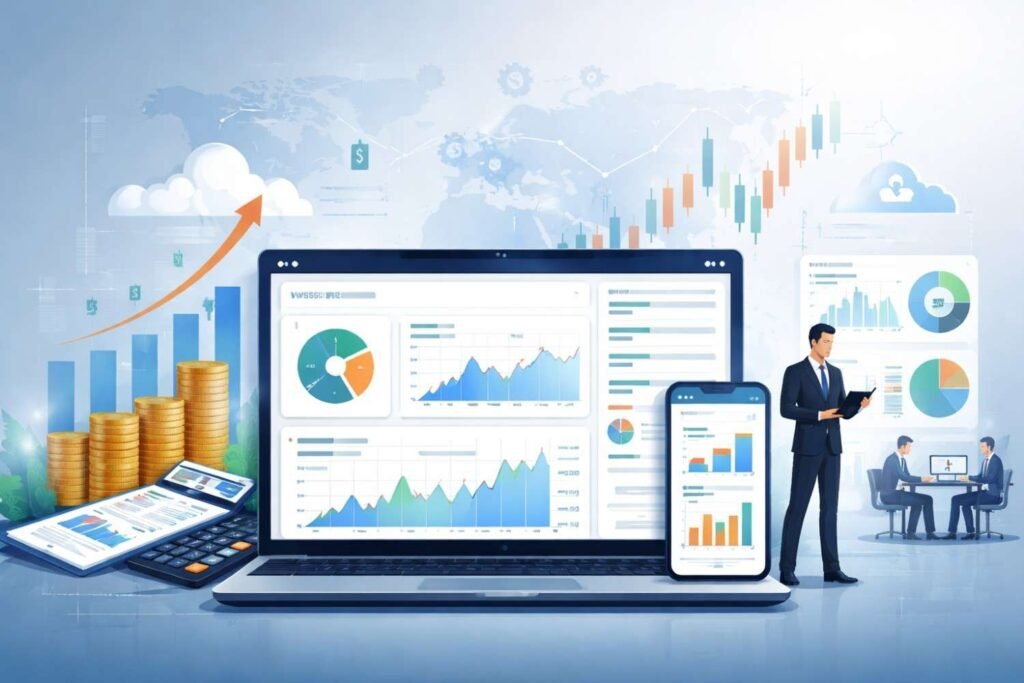
Investment software has to do much more than display changing account balances. Behind a useful dashboard sits a demanding data operation: transactions must be imported, holdings reconciled, market prices updated, cash flows classified, returns calculated, and reports produced without altering the original record. Because of these technical and operational demands, a custom portfolio platform may require about $80,000 for a streamlined initial version and more than $500,000 for a broader system supporting multiple users. Enterprise systems serving advisers, asset managers, or institutions may exceed $1 million when they include several custodians, complex accounting rules, trading workflows, regulatory controls, and large-scale data migration. These estimates are intended as general budgeting guides, not guaranteed prices for every project. Current software benchmarks place custom projects across a very broad spectrum, while 2026 app research reports budgets ranging from approximately $15,000 to more than $500,000. Portfolio platforms often sit toward the upper end because financial integrations, security, calculation accuracy, and compliance add work beyond ordinary application development. What Is Investment Portfolio Management Software? Portfolio management software brings investment data, analysis, operational workflows, and client reporting into one system. Depending on its users, the platform may serve: A personal investment tracker may simply combine accounts and show allocation changes. By comparison, an institutional platform may calculate performance across thousands of portfolios, manage approval workflows, preserve detailed audit records, and generate reports for clients, regulators, and internal committees. Therefore, the product should be defined around its operating model rather than a generic list of fintech features. Core Features of Portfolio Management Software Financial Data Aggregation and Reconciliation Reliable portfolio analysis begins with clean data. The software may receive transactions, positions, prices, security information, and cash balances from custodians, brokerages, banks, market-data services, spreadsheets, or internal systems. However, those sources rarely use identical formats. Consequently, the platform needs a normalization layer that converts incoming records into a consistent structure. It should also detect missing transactions, duplicated entries, pricing differences, unmatched securities, and unexpected cash movements. Important capabilities include: Without dependable reconciliation, even a visually impressive dashboard may present incorrect holdings or returns. Portfolio Accounting and Performance Measurement Once the data is trustworthy, the system can calculate positions, income, fees, gains, losses, and investment performance. A serious platform may need both time-weighted and money-weighted returns. A time-weighted return reduces the effect of external cash movements, making it useful for evaluating investment management performance. Meanwhile, a money-weighted return reflects the size and timing of contributions and withdrawals, which can better represent the investor’s personal experience. CFA Institute distinguishes these methods and recognizes that each answers a different performance question. Additional portfolio analytics may include: Firms claiming compliance with the Global Investment Performance Standards also need calculation and presentation policies that support fair representation and full disclosure. GIPS compliance is voluntary, but its framework is widely used to improve consistency and transparency in performance reporting. Allocation, Risk, and Rebalancing Tools Portfolio values change with market movement, deposits, withdrawals, and trades. As a result, actual allocations may drift away from their intended targets. Rebalancing software can compare current positions with model portfolios or policy ranges. It may then create recommended adjustments while accounting for cash availability, restricted securities, minimum trade sizes, and tax lots. Risk features can also examine: However, recommendations should remain explainable. Users need to understand why a trade or allocation change has been suggested, which rule produced it, and who approved the action. Client Portals and Mobile Access Advisers and investors often need different views of the same portfolio. Internal users may require reconciliation tools, detailed transactions, compliance notes, and portfolio comparisons. Clients, on the other hand, may prefer a simpler experience showing total value, allocation, performance, documents, and recent activity. Well-designed finance applications can offer: For self-service products, patterns commonly found in on demand apps can also be useful. Real-time status updates, simple requests, mobile alerts, and quick access to support can make portfolio information easier to use without overwhelming the investor. Compliance, Privacy, and Auditability Compliance requirements depend on the product, jurisdiction, users, and services being offered. Therefore, legal and compliance specialists should be involved before the architecture is finalized. For U.S. SEC requirements call for registered investment advisers to maintain specified business records in an accurate and up-to-date form. When records are stored electronically, firms need procedures that protect them from loss or unauthorized alteration, restrict access, and preserve complete and legible copies. In addition, amendments to Regulation S-P strengthened requirements for safeguarding customer information, incident response, recordkeeping, and customer notification. Larger covered organizations reached their compliance date on December 3, 2025, while smaller entities reached theirs on June 3, 2026. Accordingly, the platform may need: NIST’s Secure Software Development Framework and the OWASP Application Security Verification Standard can provide practical baselines for building and testing those controls. Optional Digital Advice and Automation Some platforms only report investment information. Other platforms go further by suggesting investment allocations, preparing proposed trades, or overseeing accounts with limited manual involvement. That difference matters. When a platform starts offering personalized investment recommendations, it may fall within the scope of regulated financial advisory services. According to the SEC, digital advisory platforms commonly gather client details through web-based questionnaires, then rely on algorithms to create or oversee investment portfolios. Weak investor questionnaires, vague disclosures, unresolved conflicts of interest, and poor algorithm oversight can produce advice that fails to reflect the investor’s actual needs. Therefore, automated advice should not be treated as an ordinary recommendation widget. It calls for legal oversight, validated decision models, clear user disclosures, human review paths, controlled version updates, and continuous evaluation of system outputs. The Development Process Step 1: Define the Users and Operating Model The project should begin by answering several basic questions: Those decisions shape the platform’s data structure, security controls, connected systems, and the depth of testing required. Step 2: Prove the Data Model and Integrations Before building the full interface, verify the data sources most likely to create technical or accuracy issues. A small-scale integration test can confirm that custody data, market
6G + Edge AI: The Mobile App Experiences We Couldn’t Build Before

The real significance of 6G + Edge AI goes far beyond increased download speeds. It is the possibility of mobile applications that can sense what is happening, interpret information nearby, and respond almost immediately without sending every task to a distant cloud server. Edge AI already allows smartphones and connected devices to run machine learning models locally. Apple’s Core ML and Google’s on-device AI tools, for example, support predictions, language processing, image understanding, and generative features directly on supported hardware. Local processing can improve responsiveness, preserve functionality during poor connectivity, and limit how much personal data leaves the device. However, 6G remains a developing standard rather than a commercially available mobile network. The International Telecommunication Union refers to the next generation as IMT-2030, while 3GPP is working toward the first formal 6G specifications through Release 21. Its current schedule places the main specification freezes between 2027 and 2028, with submissions for the IMT-2030 process expected later in the decade. The examples explored in this article represent emerging possibilities rather than fully developed 6G applications available today. They are realistic directions based on current edge AI capabilities and the official goals being defined for future networks. What Do 6G and Edge AI Mean for Mobile Apps? Edge AI moves part of the intelligence from centralized data centers to smartphones, wearables, vehicles, cameras, gateways, and nearby computing infrastructure. Instead of uploading every photo, voice command, or sensor reading for remote analysis, an application can process selected information close to where it was created. More complex workloads could be routed to cloud infrastructure, allowing the system to choose the best processing location based on data sensitivity, operating cost, battery demand, model complexity, and the speed of response required. 6G is expected to improve the network connecting those devices and computing locations. The ITU’s IMT-2030 framework identifies six broad usage areas: Together, these capabilities could make mobile apps more aware of their surroundings and better able to coordinate intelligence across phones, nearby edge servers, sensors, and cloud platforms. Why Can’t Today’s Networks Deliver Everything Already? Many early versions of these experiences are possible on 5G, Wi-Fi, and current mobile hardware. The limitation appears when an application must maintain demanding AI performance continuously, across changing locations, while coordinating several devices and processing large amounts of real-time data. A phone may run a compact model locally, but a more capable model can exceed its available memory, processing capacity, or battery budget. Sending the task to the cloud creates another problem: response time and reliability become dependent on the connection. In addition, some future experiences require more than moving data quickly. They need precise positioning, synchronized device behavior, environmental sensing, dependable coverage, and access to computing resources near the user. The ITU expects IMT-2030 to combine communication with AI and sensing capabilities while supporting areas such as immersive media, digital twins, industrial systems, digital health, and broader connectivity. As a result, the real promise is not one extremely fast phone. It is a coordinated environment in which the network can help applications decide where data should be processed and how devices should work together. Mobile Assistants That Understand the Immediate Environment Current assistants mainly react to a prompt. A future edge-enabled assistant could maintain a richer understanding of what the user is seeing, hearing, doing, and trying to accomplish. Imagine a traveler moving through an unfamiliar station while the app reads nearby signs, converts spoken announcements into their preferred language, locates the right platform, considers mobility requirements, and updates the route as conditions change. Part of the workload could stay on the device, helping keep sensitive data private while delivering a faster response. Meanwhile, larger reasoning tasks might move to a nearby edge server. Because the application would not depend entirely on one processing location, it could remain responsive while balancing model capability, network quality, and battery consumption. Developers already have access to on-device frameworks for image recognition, language analysis, transcription, and generative AI. Therefore, 6G would not invent intelligent mobile assistants from nothing. It could enable these assistants to remain useful in dynamic, unpredictable environments rather than only in controlled scenarios. Shared Augmented Reality That Stays in Sync Today’s augmented reality experiences often work best for one user on one device. Shared experiences become harder because virtual objects must appear in the correct physical location for everyone at nearly the same moment. With 6G + Edge AI, a group could view and interact with the same digital layer while moving through a real environment. A museum application, for instance, might place a reconstructed historical scene inside a gallery. Each visitor could see the scene from a different angle, while the system continuously adjusts the digital content to match movement, position, lighting, and nearby obstacles. The network would need to exchange spatial information quickly and reliably. Meanwhile, edge models could interpret camera and sensor data close to the users rather than sending every video frame to a remote cloud. Immersive communication is one of the main IMT-2030 usage scenarios, and 3GPP research is examining experiences that require AI inference and synchronized virtual content across users and devices. Possible applications include collaborative design, remote training, sports viewing, tourism, education, and multiplayer gaming. Live Digital Twins That Fit Inside a Mobile Workflow A digital twin is a virtual model of a real-world asset, setting, or operation that stays current through ongoing data updates. Currently, digital twins are commonly viewed through specialized industrial systems. In the future, mobile employees could interact with them through ordinary phones, tablets, glasses, or wearables. A maintenance engineer might point a device at a machine and see its operating condition, recent sensor changes, predicted failure risk, and repair guidance layered over the physical equipment. Rather than receiving a static dashboard, the worker would get information matched to the exact asset and current situation. Edge AI could analyze sensor streams locally and identify abnormal behavior quickly. At the same time, the network could coordinate data from multiple machines, workers, cameras, and control systems. This model