What ChatGPT Memory Reveals About the Future of Personalized App Experiences
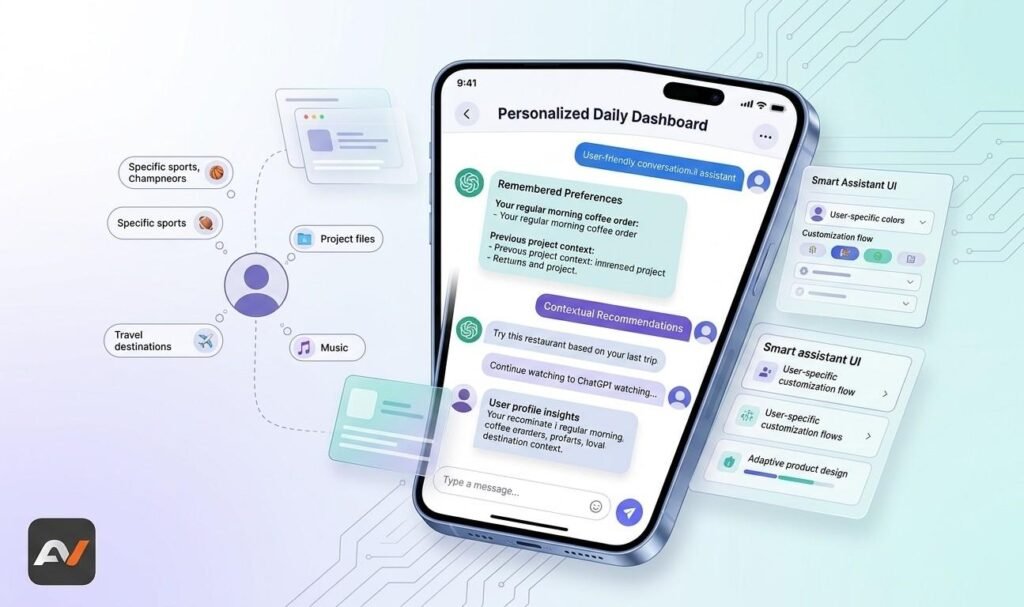
Personalization in apps used to mean fairly simple things, such as remembering a language setting, showing recently viewed items, or recommending content based on broad behavior patterns. However, products are now moving toward something deeper. They are beginning to recognize preferences over time, respond to context more naturally, and create personalized app experiences that feel more continuous rather than fragmented. That is why ChatGPT’s Memory feature is so interesting. It is not just a product update. Instead, it offers a useful signal about where digital experiences may be heading next. OpenAI describes Memory as a way for ChatGPT to remember helpful details between conversations so responses can become more relevant and personalized over time. In other words, the feature points to a broader shift: users increasingly expect apps to remember what matters, reduce repetition, and become more useful the longer they are used. At the same time, OpenAI has paired Memory with user controls, including the ability to ask what ChatGPT remembers, delete saved memories, turn Memory off, and use Temporary Chat when continuity is not wanted. That combination of personalization and control is important because it suggests that the future of personalized app experiences will likely depend not only on intelligence, but also on trust and transparency. What ChatGPT Memory Actually Does To understand what this means for app design, it helps to first understand what ChatGPT Memory is. OpenAI says Memory works in two ways: saved memories and chat history. Saved memories are details ChatGPT keeps for future conversations, such as preferences, goals, or personal context the user explicitly wants remembered. Chat history, meanwhile, lets ChatGPT reference past conversations even when information has not been stored as a formal saved memory. OpenAI also notes that saved memories can be added automatically or by direct request, such as telling ChatGPT to remember something. That distinction matters because it shows that modern personalization is becoming more layered. It is no longer only about storing static preferences. Instead, it can involve a mix of explicit user input, inferred relevance, and short- or longer-term continuity. OpenAI’s June 2025 update also made this clearer by expanding Memory so ChatGPT could reference recent conversations to provide more personalized responses, with a lightweight version for free users and broader continuity for Plus and Pro users. Why This Matters Beyond ChatGPT The reason this feature matters so much is that it reflects a broader product pattern. Users do not want to repeat themselves constantly across digital experiences. They want tools that remember useful context, understand preferences, and respond in ways that feel more tailored over time. OpenAI’s own personalization guidance frames Memory and custom instructions as ways to make ChatGPT more relevant, more consistent, and more useful. That same principle applies well beyond chat interfaces. For product teams, the lesson is clear: personalized app experiences are becoming less about static settings and more about evolving relationships. Instead of asking only, “What does this user like?” teams may increasingly need to ask, “What should this product remember, what should it infer, and what should the user always stay in control of?” ChatGPT Memory is especially useful as an example because it shows those questions playing out in an actual product people use every day. The Future Is Moving From Sessions to Continuity One of the strongest signals from ChatGPT Memory is the shift from session-based interaction to continuity-based interaction. Traditionally, many apps behave as though every session starts almost from zero. Even when data exists, the experience often fails to feel truly cumulative. By contrast, Memory suggests a model where the product becomes more useful as it builds context over time. OpenAI explicitly says that the more you use ChatGPT, the more useful it becomes as it develops a better understanding of what works best for you. That idea is likely to influence more than chat tools. Productivity apps, education platforms, healthcare tools, financial dashboards, travel products, and even everyday consumer apps can all benefit from better continuity. A modern app experience may soon be judged not only by what it can do in one moment, but by how well it remembers and adapts across many moments. In that sense, ChatGPT Memory hints at a future where personalization is less episodic and more cumulative. Personalization Will Need Better User Controls At the same time, ChatGPT Memory also makes another point obvious: personalization without control can feel invasive. OpenAI has built Memory with several controls, including the ability to review memories, delete specific entries, clear all saved memories, turn Memory off entirely, and use Temporary Chat for conversations that should not affect or use remembered context. OpenAI also notes that Memory is intended for high-level preferences and helpful details, not for exact templates or large blocks of verbatim text. This matters because it suggests that the future of personalized app experiences will depend less on how much an app remembers and more on how carefully that memory is managed. Users are more likely to trust personalization when they understand what is being retained, why it is useful, and how to control it. Therefore, app teams should treat transparency as part of personalization design, not as a separate compliance issue. ChatGPT Memory makes this principle especially visible because the controls are positioned as part of the feature itself. Memory-Driven Personalization Changes UX Expectations Another important takeaway is that memory-based systems can change what users expect from digital experiences. Once people become used to a product that remembers goals, preferences, and prior context, they start to expect less repetition and more relevance elsewhere. OpenAI’s personalization material explicitly presents Memory as a way to make interactions more tailored and consistent. That creates a benchmark. Over time, users may begin to see generic, repetitive app flows as outdated. This has practical implications for product design. Future app experiences may need to answer questions like: These are no longer abstract design questions. ChatGPT Memory has already turned them into product realities. What This Means for Product Teams and Builders For product teams,