AI-Based Health Monitoring System | How It Works and Why It Matters
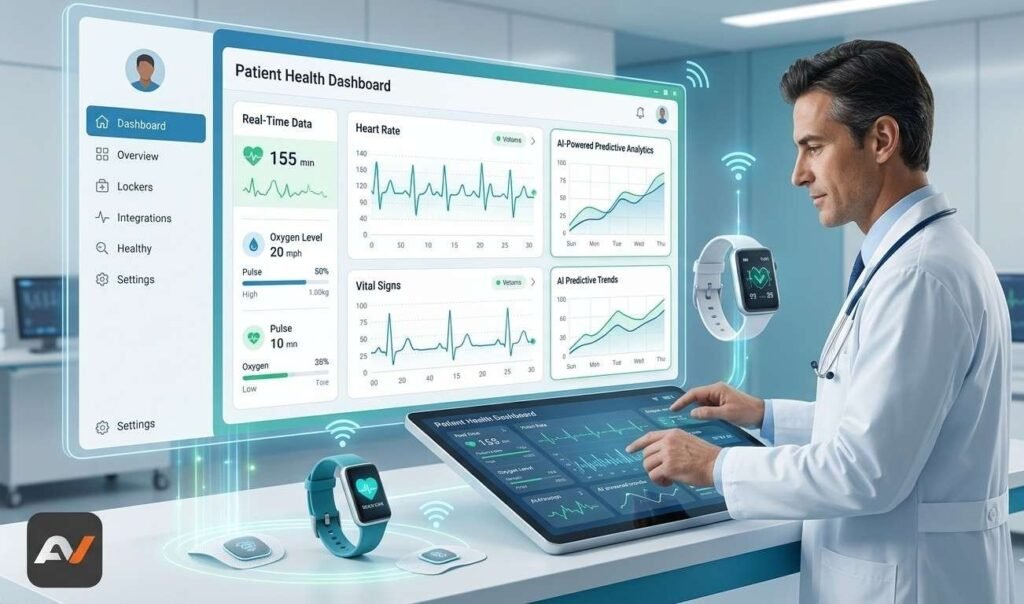
Healthcare is becoming more connected, more data-driven, and, at the same time, more dependent on tools that can turn constant streams of information into useful action. Because of that, interest in the ai-based health monitoring system has grown quickly. Hospitals, clinics, digital health companies, and even home-care providers are looking for better ways to track patient health, detect changes earlier, and support faster decision-making. Meanwhile, patients are also becoming more familiar with wearables, remote monitoring tools, and mobile health platforms. So, what exactly is an AI-based health monitoring system, and why does it matter so much now? At its core, it is a monitoring setup that uses artificial intelligence to collect, process, analyze, and interpret health-related data in order to support better observation and earlier intervention. Instead of simply recording numbers, these systems can help identify patterns, flag unusual readings, and support more proactive care. That said, while the promise is significant, the real value depends on how these systems are built, how reliable the data is, and how responsibly they are used. The FDA notes that AI-enabled technologies have the potential to transform healthcare by deriving meaningful insights from the large amount of data generated during care delivery. What Is an AI-Based Health Monitoring System? An ai-based health monitoring system is a digital health system that combines patient data collection with AI-driven analysis to help monitor health status over time. In many cases, these systems use inputs from wearable devices, sensors, mobile apps, or connected medical devices. Then, once that data is gathered, machine learning or other AI techniques analyze it for patterns, trends, and potential warning signs. In simple terms, a traditional monitoring system might show heart rate, oxygen levels, blood pressure, or sleep data. By contrast, an AI-based system can go further by spotting irregular changes, predicting possible deterioration, or helping clinicians prioritize attention. Therefore, the difference is not just in collecting data, but in making that data more actionable. Research on remote patient monitoring describes these systems as ways to collect patient vital signs and deliver real-time information that can support clinical decisions. How It Works Although different products and care models vary, most AI-based monitoring systems follow a similar structure. Data Collection First, the system gathers data from one or more sources. These may include: In some cases, the system also uses symptom reporting, medication adherence data, or activity tracking. As a result, the platform builds a broader picture of the patient’s status rather than relying on one isolated metric. Research on wearable and remote monitoring highlights how these technologies are increasingly used to collect behavioral data, monitor symptoms, and support both assessment and treatment. Data Transmission and Integration Next, the collected information is sent to a central platform, often in near real time. Depending on the setup, this may happen through Bluetooth, Wi-Fi, cloud-based systems, or mobile networks. After that, the platform organizes and stores the data so it can be reviewed, compared, and analyzed over time. In more advanced systems, this monitoring data may also connect with electronic health records or other care platforms. Consequently, clinicians can view monitoring insights alongside broader patient history, which can improve context and reduce fragmented decision-making. Emerging research also points to the value of integrating AI, wearable data, EHRs, and patient-reported outcomes to support more proactive and personalized care. AI Analysis This is where the “AI-based” part becomes important. Rather than simply showing numbers on a dashboard, the system applies algorithms to identify patterns, compare trends, and detect abnormal readings. Depending on the design, it may: For example, in remote monitoring and wearable health applications, AI and machine learning are used to process time-series data and assist with health tracking, diagnostics, and forecasting. That means the system can do more than passively observe; it can help interpret. Alerts, Recommendations, or Escalation Once the AI identifies something important, the system may trigger alerts for clinicians, care teams, or patients. In some cases, it may also provide risk scores, summaries, or suggested next steps. However, in responsible healthcare use, these outputs should support clinical judgment rather than replace it. That distinction matters. AI in monitoring can help speed up attention and reduce oversight gaps, yet healthcare decisions still need appropriate human review, especially when patient safety is involved. WHO emphasizes that AI for health should be adopted in ways that are safe, ethical, and equitable, with proper governance and regulation. Key Features of an AI-Based Health Monitoring System A strong ai-based health monitoring system often includes several practical capabilities. Real-Time Monitoring One of the most important features is real-time or near-real-time tracking. This allows providers to observe patient data continuously instead of waiting for occasional in-person visits. As a result, changes can be noticed earlier. Predictive Insights Another major feature is prediction. Rather than simply showing current values, the system may identify trends that suggest deterioration, irregularity, or higher future risk. This is particularly useful in chronic disease management, elderly care, and cardiac monitoring. Automated Alerting Instead of requiring a clinician to manually review every data point, the system can surface unusual readings automatically. That said, alert quality matters just as much as alert quantity. If a system produces too many weak alerts, it can create fatigue rather than value. Personalized Monitoring Because AI systems can learn from historical and individual patterns, they can often support more personalized monitoring than fixed threshold systems alone. In practice, this may improve relevance and reduce unnecessary escalation. Trend Visualization Most systems also include dashboards or visual reports so that clinicians and care teams can understand patterns over time. Therefore, the system becomes more usable in real workflows, not just technically sophisticated. Benefits of AI-Based Health Monitoring There is growing interest in these systems for good reason. When built and deployed well, they can support several meaningful benefits. Earlier Detection of Health Changes One of the biggest advantages is earlier recognition of worsening conditions. Because monitoring happens continuously or frequently, changes can be identified before they become emergencies. This can be especially