
How to Build a Stronger Cloud Security Strategy: Key Tips for Businesses
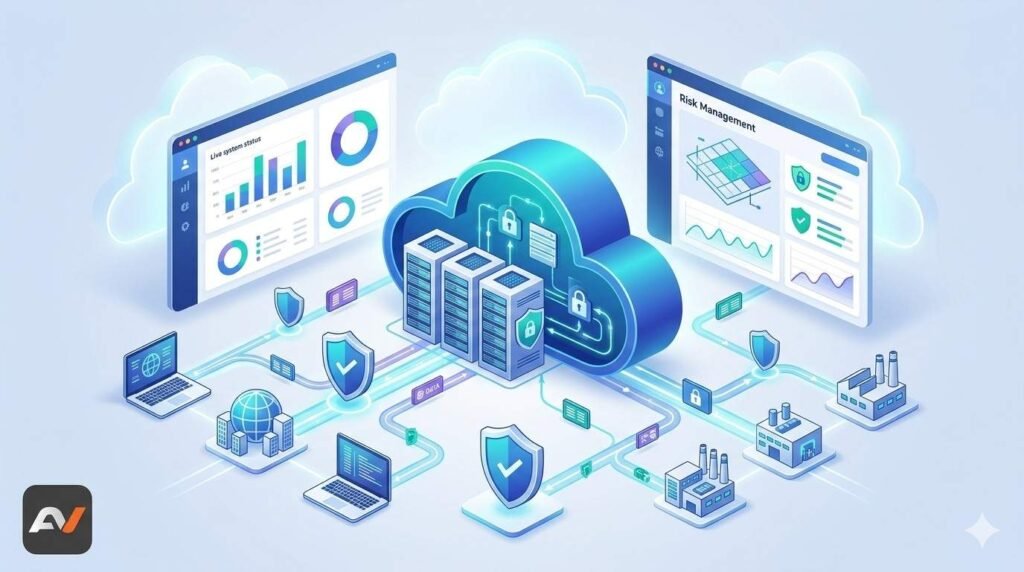
Cloud adoption has made business operations more flexible, scalable, and efficient. At the same time, it has also changed how security works. When data, applications, and workflows move into cloud environments, businesses gain speed and convenience. However, they also take on new responsibilities around access control, visibility, configuration, and risk management. NIST notes that cloud computing introduces important security and privacy considerations, especially when organizations rely on external providers and shared infrastructure. Because of that, building a stronger cloud security strategy is no longer optional. It is a practical requirement for businesses that want to protect sensitive information, maintain trust, and reduce the risk of disruption. Although cloud platforms provide powerful security capabilities, those features only help when they are configured well and managed consistently. CISA and NSA recently emphasized cloud security best practices precisely because poor configurations and weak security controls continue to create avoidable exposure. So, if you are looking for actionable cloud security tips, the goal is not just to “be more secure” in a general sense. Instead, the goal is to build a strategy that helps your business understand its risks, control access, monitor activity, and respond quickly when something goes wrong. That is what turns cloud security from a technical checkbox into a real business capability. What Is a Cloud Security Strategy? A cloud security strategy is a structured approach for protecting cloud-based systems, data, users, and workloads. In simple terms, it defines how a business secures what it puts in the cloud and how it manages risk over time. Rather than depending on one tool or one setting, it combines policies, identity controls, configuration standards, monitoring, and incident response into a coordinated model. NIST and CISA both frame cloud security as a combination of governance, technical controls, and operational discipline rather than a single product decision. That matters because many cloud security problems do not come from the cloud itself. Instead, they often come from misconfigurations, poor access management, weak visibility, or unclear responsibility between the business and the provider. Therefore, a strong strategy starts with understanding the environment clearly before trying to add more tools. Why Cloud Security Matters More Now As cloud use expands, so does the attack surface. Businesses are now dealing with remote access, SaaS platforms, APIs, hybrid environments, and distributed workloads. As a result, security teams need to think beyond traditional network boundaries. CISA’s cloud guidance and secure cloud baselines reflect this shift by focusing on configuration, identity, and secure administration rather than assuming a fixed perimeter. At the same time, cloud security matters because the business impact of mistakes can be serious. A single misconfigured storage bucket, over-permissioned user account, or unmonitored admin action can expose sensitive data or interrupt operations. So while the cloud can improve resilience, it also requires stronger discipline in how systems are managed, Cloud security becomes even more important during cloud migration, since moving systems, data, and workloads can introduce new risks if the process is not planned carefully. As businesses shift operations into cloud environments, they need to think not only about performance and scalability, but also about access controls, data protection, configuration standards, and long-term visibility from the very beginning. Cloud Security Tips That Strengthen Business Protection Start with visibility before complexity One of the most useful cloud security tips is to first understand what you actually have in the cloud. Many businesses use more services than they realize, especially once multiple teams begin adopting cloud tools independently. Therefore, before you try to optimize security, take inventory of accounts, assets, workloads, identities, and third-party connections. A strategy built without visibility usually leaves important gaps behind. CISA’s cloud architecture guidance emphasizes visibility and consistent policy enforcement across workloads as foundational. Tighten identity and access management Access control is one of the most important areas in any cloud environment. NIST’s guidance on access control for cloud systems explains that different cloud service models require careful management of who can access which service components. In practice, that means using strong identity and access management, limiting permissions, removing unnecessary privileges, and reviewing access regularly. Additionally, businesses should use multi-factor authentication for administrative and sensitive accounts wherever possible. CISA’s secure cloud practices consistently point toward stronger identity protections because compromised credentials remain one of the easiest ways for attackers to gain access. Reduce misconfigurations Configuration mistakes continue to be a common cloud security issue, which is why secure baseline guidance now receives so much attention. In fact, CISA’s secure cloud work specifically addresses configuration baselines for cloud services to reduce exposure. So one of the most practical cloud security best practices is to standardize how systems are configured and review them continuously rather than relying on one-time setup. This includes checking: Even small errors in these areas can create larger problems later. Therefore, configuration management should be treated as an ongoing process, not a one-time project. Protect data based on sensitivity Not all business data carries the same level of risk. Because of that, a stronger strategy classifies data and applies controls accordingly. NIST’s cloud security guidance emphasizes understanding the security and privacy implications of moving data, applications, and infrastructure into public cloud environments. Practically speaking, this means businesses should know: This is especially important for regulated industries or businesses handling personal, financial, or operationally sensitive data. Monitor activity continuously A strong cloud security strategy is not only preventive. It also depends on monitoring. Businesses need to know when access patterns change, when privileged actions happen, and when systems behave unexpectedly. NIST’s workload security guidance stresses the need to monitor, track, apply, and enforce policies in a consistent and repeatable way across cloud workloads. Therefore, logging, alerting, and activity review should be part of day-to-day operations. Without them, businesses may not notice problems until after damage has already occurred. Build security into cloud architecture early Security is easier to manage when it is part of architecture from the start. CISA’s Cloud Security Technical Reference Architecture was designed to help organizations make informed security decisions around
Enterprise Machine Learning Explained: Why It Matters for Today’s Businesses

Machine learning is no longer limited to research teams or experimental pilots. In many organizations, it has become part of how decisions are made, how operations are optimized, and how customer experiences are improved. However, once machine learning moves beyond a single model or isolated department, the conversation changes. At that point, businesses are no longer just “using ML.” They are dealing with enterprise machine learning. That distinction matters because enterprise use brings new demands. A small proof of concept might be manageable with a few people and a limited dataset. By contrast, enterprise environments involve larger data systems, more stakeholders, stricter governance, and a much greater need for reliability, security, and scale. Consequently, what works in a lab or pilot often is not enough in production. This guide explains what it actually means, how it differs from smaller-scale ML efforts, why it matters, and what businesses should understand before adopting it more broadly. It also covers the practical issues that often determine whether machine learning creates real business value or stays stuck in experimentation. What Is Enterprise Machine Learning? In simple terms, it refers to the use of machine learning across an organization in a structured, scalable, and operationally reliable way. It is not just about building one model. Instead, it involves creating the processes, infrastructure, governance, and cross-functional workflows needed to develop, deploy, monitor, and improve machine learning systems at business scale. So, while traditional ml projects may focus mostly on model accuracy, E-ML focuses on much more than that. It includes how data is prepared, how teams collaborate, how models are monitored after launch, how risk is managed, and how systems continue to perform over time. In other words, it treats machine learning as an operational capability, not just a technical exercise. A useful way to think about it is this: standard machine learning asks, “Can we build a model that works?” Enterprise machine learning asks, “Can we build, run, govern, and scale ml in a way the business can depend on?” Why Enterprise Machine Learning Matters For modern businesses, the value of machine learning usually comes from repetition and scale. A model that improves one internal task may be helpful. However, a coordinated machine learning capability that supports forecasting, risk scoring, anomaly detection, customer segmentation, personalization, and operational automation across multiple teams can create much broader impact. That is why enterprise machine learning matters: it turns isolated wins into repeatable business capability. At the same time, many organizations still struggle to move from pilot projects to scaled value. McKinsey’s 2025 reporting highlights that although AI adoption is broader, many companies still have not embedded AI deeply enough into workflows and processes to produce material enterprise-level impact. That gap between experimentation and scaled implementation is exactly where enterprise machine learning becomes important. Moreover, enterprise machine learning matters because business expectations are higher now. Leaders do not just want interesting models. They want systems that can improve productivity, support decision-making, reduce risk, and work consistently in real operating conditions. Therefore, machine learning has to fit into the wider business environment, including compliance, security, infrastructure, and human oversight. How Enterprise Machine Learning Differs From Traditional ML Projects One of the clearest differences is scale. In smaller ML projects, the work often stays within a technical team. In enterprise settings, the work extends across data engineering, IT, compliance, security, business operations, product teams, and leadership. As a result, the challenge is not only technical; it is organizational as well. Another major difference is operational responsibility. A single model built for analysis may not need constant monitoring. However, enterprise machine learning systems do. Models can drift, data pipelines can break, and business conditions can change. Therefore, organizations need structured monitoring, retraining workflows, validation, and production controls. Microsoft, AWS, Google Cloud, and IBM all describe MLOps as essential for managing machine learning systems through their full lifecycle, especially at scale. In addition, enterprise systems demand stronger governance. When machine learning affects credit decisions, operational workflows, customer interactions, or workforce processes, the cost of error increases. Consequently, businesses need transparency, documentation, access controls, testing, and risk frameworks that go beyond a standalone modeling project. Core Components of Enterprise Machine Learning Data Infrastructure Machine learning is only as useful as the data behind it. In enterprise environments, that means data pipelines, storage systems, access controls, and data quality processes must be dependable. If the underlying data is inconsistent, incomplete, or poorly governed, even a strong model will struggle in production. Because of that, data engineering is usually one of the foundations of enterprise machine learning. Model Development and Validation Building a model is still central, of course. Yet in enterprise settings, model development includes more than experimentation. Teams also need repeatable validation, benchmarking, testing, and documentation. This is especially important when multiple models are being developed by different teams over time. Standardization helps reduce inconsistency and makes deployment more reliable. Deployment and Integration A model only becomes useful when it connects to real workflows. That could mean integration into dashboards, APIs, business applications, customer-facing products, or internal operational systems. Therefore, enterprise machine learning depends heavily on deployment architecture and cross-system integration. If a model cannot be delivered in a usable way, it may never create value. MLOps MLOps, or machine learning operations, is one of the defining elements of enterprise machine learning. It covers the operational practices needed to train, test, deploy, monitor, retrain, and govern models over time. IBM describes MLOps as an assembly line for building and running machine learning models, while Microsoft frames it as the intersection of people, process, and platform for delivering ML value at scale. Governance and Risk Management Enterprise machine learning also requires policies and oversight. NIST’s AI Risk Management Framework emphasizes managing risks associated with AI systems throughout their design, development, deployment, and use. In practical terms, that means businesses need a way to handle fairness concerns, performance risk, human oversight, documentation, and accountability. Common Business Use Cases Enterprise machine learning is valuable because it