
Enterprise AI News: Key Developments Shaping Business in 2026
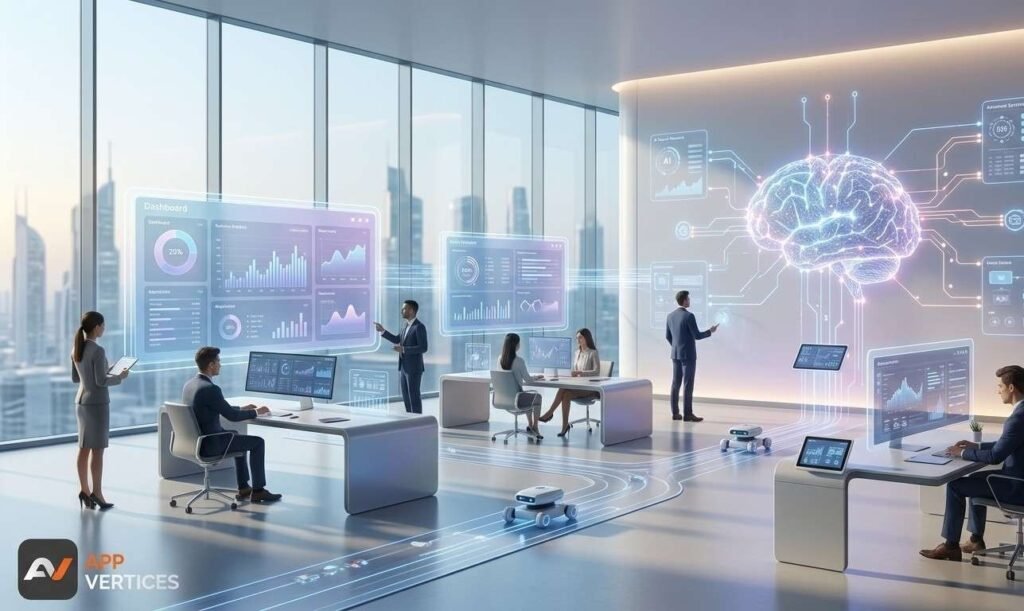
The pace at which artificial intelligence is evolving has made it increasingly important for businesses to stay informed. In 2026, enterprise AI news is no longer just about innovation—it is about how organizations are restructuring operations, redefining workflows, and rethinking decision-making at scale. While AI was once viewed as a supporting technology, it has now become a foundational layer across industries. As a result, companies are not only adopting AI tools but also integrating them deeply into their core systems. This shift is shaping how businesses operate, compete, and grow. In this article, we explore the most important developments in enterprise AI and what they mean for organizations moving forward. The Shift from Automation to Autonomy One of the most significant changes highlighted in recent enterprise AI news is the transition from simple automation to autonomous systems. Previously, AI was mainly used to automate repetitive tasks. However, modern systems are now capable of: Because of these advancements, enterprises are beginning to rely on AI not just for efficiency, but also for operational intelligence. Consequently, AI is no longer limited to backend processes—it is actively influencing strategic outcomes. Also, As AI adoption continues to expand across industries, organizations are increasingly focusing on how to scale and integrate these technologies effectively. Industry research, including insights from McKinsey’s State of AI report, highlights how enterprises are moving beyond experimentation toward full-scale implementation. Rise of AI Agents in Enterprise Environments Another major development is the rapid adoption of AI agents within enterprise systems. Unlike traditional tools, AI agents are designed to perform tasks independently. They can analyze data, interact with multiple systems, and execute actions without constant human input. For example, in enterprise settings, AI agents are now being used to: As this trend continues, businesses are moving toward more self-operating systems, where AI handles complex processes while humans focus on higher-level strategy. Integration Across Business Functions AI is no longer limited to just one department within an organization. Instead, it is being integrated across entire organizations. Key Areas of Integration Because of this widespread integration, AI is becoming a unifying layer that connects different parts of a business. In turn, this improves efficiency and enables more informed decision-making. Data as the Core of Enterprise AI While AI systems are becoming more advanced, their effectiveness still depends heavily on data. In 2026, enterprises are placing greater emphasis on: As a result, companies are investing in systems that can handle large volumes of data while maintaining accuracy and compliance. Without high-quality and dependable data, even the most sophisticated AI systems struggle to produce accurate or useful outcomes. The Growing Importance of AI Governance As the use of AI continues to expand, the importance of proper oversight and governance grows alongside it. Organizations are now focusing on: This shift is particularly important because AI systems are increasingly involved in critical decisions. Therefore, businesses must ensure that these systems operate in a fair, accountable, and transparent manner. Enterprise AI and Customization Another key trend in enterprise AI news is the move toward customized AI solutions. Instead of relying solely on generic tools, businesses are investing in tailored systems that align with their specific needs. This approach allows for: For instance, companies working with an experienced ai services provider often develop solutions that are specifically designed for their workflows and data environments. Because of this, customization is becoming a critical factor in successful AI adoption. The Role of Scalable Infrastructure As AI systems grow more complex, infrastructure becomes increasingly important. Enterprises are now focusing on: These elements are essential for supporting large-scale AI operations. Without the right infrastructure, even well-designed systems may struggle to perform effectively. Moreover, scalability ensures that AI solutions can grow alongside the business, rather than becoming a limitation. Enterprise-Grade Development Practices With AI becoming central to business operations, development standards are also evolving. Organizations are adopting enterprise-grade development practices to ensure that their AI systems are: This includes rigorous testing, continuous monitoring, and structured deployment processes. As a result, AI is being treated more like a core software system rather than an experimental tool. Real-World Impact Across Industries The influence of AI is visible across multiple industries, each leveraging it in different ways. Healthcare AI is improving diagnostics, patient management, and operational efficiency. Finance Institutions are using AI for risk analysis, fraud detection, and automated trading. Retail Businesses are enhancing customer experiences through personalization and demand forecasting. Manufacturing AI is optimizing production processes and reducing downtime through predictive maintenance. Because of these applications, AI is no longer industry-specific. Instead, it has become a cross-industry enabler. Challenges Businesses Still Face Despite the progress, several challenges remain. Common Challenges However, these challenges are gradually being addressed as tools become more accessible and best practices become more established. What This Means for Businesses in 2026 The developments highlighted in current enterprise AI news point to a clear direction: AI is becoming a central part of how businesses operate. However, success is not just about adopting AI. Instead, it depends on how well organizations: Because of this, companies that approach AI strategically are more likely to see long-term benefits. Final Thoughts Enterprise AI is no longer a future concept—it is a present reality shaping how businesses function at every level. From autonomous systems to integrated workflows, the changes taking place in 2026 are redefining what it means to operate efficiently and competitively. When looking at enterprise AI news, it becomes clear that the focus is shifting from experimentation to execution. Businesses are no longer asking whether they should use AI, but rather how they can use it more effectively. Ultimately, the organizations that succeed will be those that treat AI not just as a tool, but as a core component of their strategy. By doing so, they can navigate the evolving landscape with greater confidence and clarity. For organizations looking to better understand how enterprise AI can fit into their workflows, you can contact us to learn more about available approaches and solutions.