AI Agent vs Chatbot in 2026: How They Work and When to Use Each
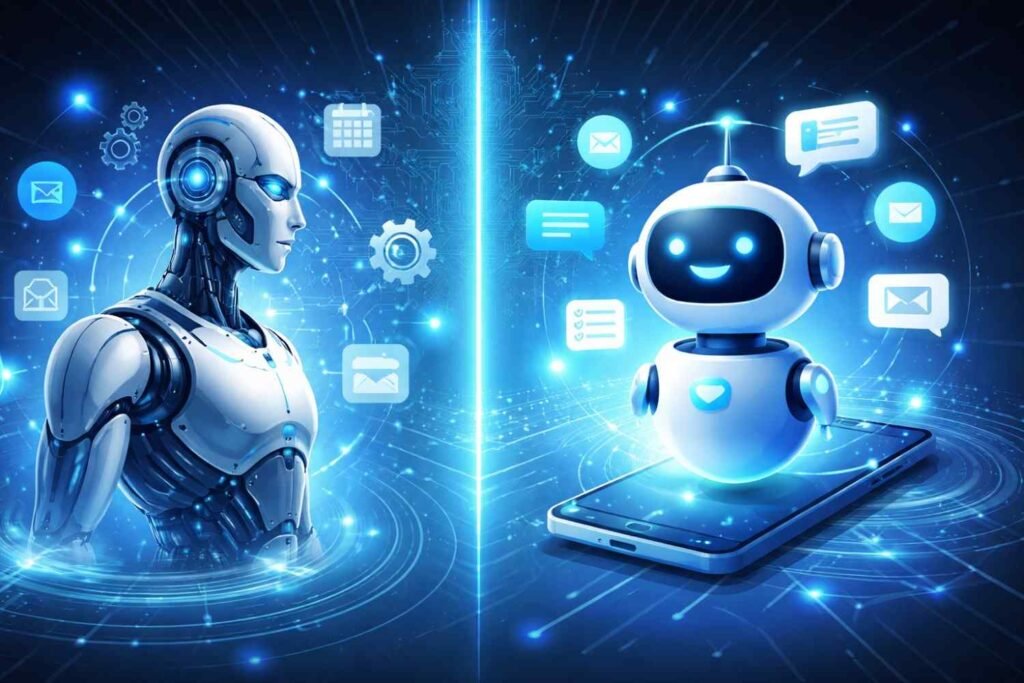
Understanding the Difference Between AI Agents and Chatbots As artificial intelligence continues to evolve, the distinction between tools that once seemed similar is becoming more important. One of the most common areas of confusion today is the difference between an AI Agent vs Chatbot. While both are used to automate interactions and improve efficiency, they operate in fundamentally different ways. Understanding that difference is not just a technical exercise. Instead, it directly affects how businesses design digital experiences, how users interact with systems, and how decisions are made across workflows. In this guide, we’ll explore how each works, where they overlap, and more importantly, when it makes sense to use one over the other. Why the Difference Matters More in 2026 A few years ago, chatbots were often seen as the primary form of conversational automation. However, as AI systems have become more capable, a new category has emerged—AI agents. At first glance, both may appear similar because they interact through language. However, the underlying capabilities are significantly different. While chatbots are typically designed for structured conversations, AI agents are built to act, reason, and execute tasks independently. Because of this shift, choosing between them is no longer just about communication—it’s about capability, autonomy, and outcomes. What Is a Chatbot? A chatbot is a software tool built to interact with users by mimicking human-like conversation. Traditionally, chatbots have been rule-based, meaning they follow predefined scripts or decision trees. Although modern versions incorporate natural language processing (NLP), their core function remains focused on responding to user inputs. How Chatbots Work Most chatbots operate in one of two ways: Even so, both types are generally limited to: For example, a customer service chatbot may help users track an order or reset a password. However, it does not independently decide what to do beyond its programmed scope. What Is an AI Agent? An AI agent, on the other hand, goes beyond conversation. It is designed to take action based on goals, not just respond to prompts. Rather than waiting for instructions at every step, an AI agent can: How AI Agents Work AI agents typically combine several components: As a result, they can operate more like a digital assistant with autonomy, rather than a reactive interface. For instance, instead of simply answering a query about scheduling, an AI agent could: All without requiring step-by-step user input. AI Agent vs Chatbot: Core Differences To better understand AI Agent vs Chatbot, it helps to compare their core characteristics. Feature Chatbot AI Agent Function Responds to queries Executes tasks Behavior Reactive Proactive Scope Limited to scripts or intent Multi-step reasoning Decision Making Minimal Advanced Integration Basic Deep system integration While both can improve user interaction, their roles are fundamentally different. Where Chatbots Still Make Sense Despite the rise of AI agents, chatbots remain highly relevant. In fact, for many use cases, they are still the most practical choice. Ideal Use Cases for Chatbots Because chatbots are easier to deploy and maintain, they work well in scenarios where: For example, businesses working with experienced chatbot developers often implement chatbots to handle high-volume, low-complexity interactions efficiently. Where AI Agents Offer More Value On the other hand, AI agents are better suited for situations that require decision-making and execution, rather than just communication. Ideal Use Cases for AI Agents For instance, instead of guiding a user through steps, an AI agent can complete the process entirely. This becomes especially valuable in environments where time, accuracy, and adaptability matter. Additionally, organizations investing in custom AI solutions are increasingly leveraging AI agents to streamline operations and reduce manual intervention. Key Advantages of Each Approach Chatbots AI Agents However, the choice is not always one or the other. Can AI Agents Replace Chatbots? Not entirely—and this is where many misunderstand the comparison. While AI agents are more advanced, they are not always necessary. In fact, using an AI agent for a simple FAQ system would be inefficient. Conversely, using a chatbot for a complex workflow would be limiting. Therefore, the better approach is to view them as complementary tools, rather than replacements. How to Decide Between AI Agent vs Chatbot Choosing the right option depends on your specific needs. Choose a Chatbot If: Choose an AI Agent If: In many cases, a hybrid approach can also be effective, where a chatbot handles initial interaction and an AI agent takes over for more complex tasks. The Shift Toward Autonomous Systems One of the biggest trends shaping this space is the move toward autonomous AI systems. While chatbots represent the first stage of conversational automation, AI agents represent the next stage—where systems do not just respond, but actively contribute. This shift is being driven by: As a result, businesses are rethinking how they use AI—not just as a communication tool, but as a functional layer within operations. Final Thoughts When comparing AI Agent vs Chatbot, the key difference lies in capability. Chatbots are designed to communicate.AI agents are designed to act. While both play important roles, the choice depends on the complexity of the task and the level of autonomy required. For simpler interactions, chatbots remain effective and efficient. However, for more advanced workflows, AI agents offer a level of functionality that traditional systems cannot match. Ultimately, the goal is not to adopt the most advanced tool, but to use the right tool for the right problem. By understanding how each works and where it fits, you can make decisions that are not only technically sound, but also aligned with real-world needs.
App Vertices Launches Florida Insurance Estimator App on the Apple App Store
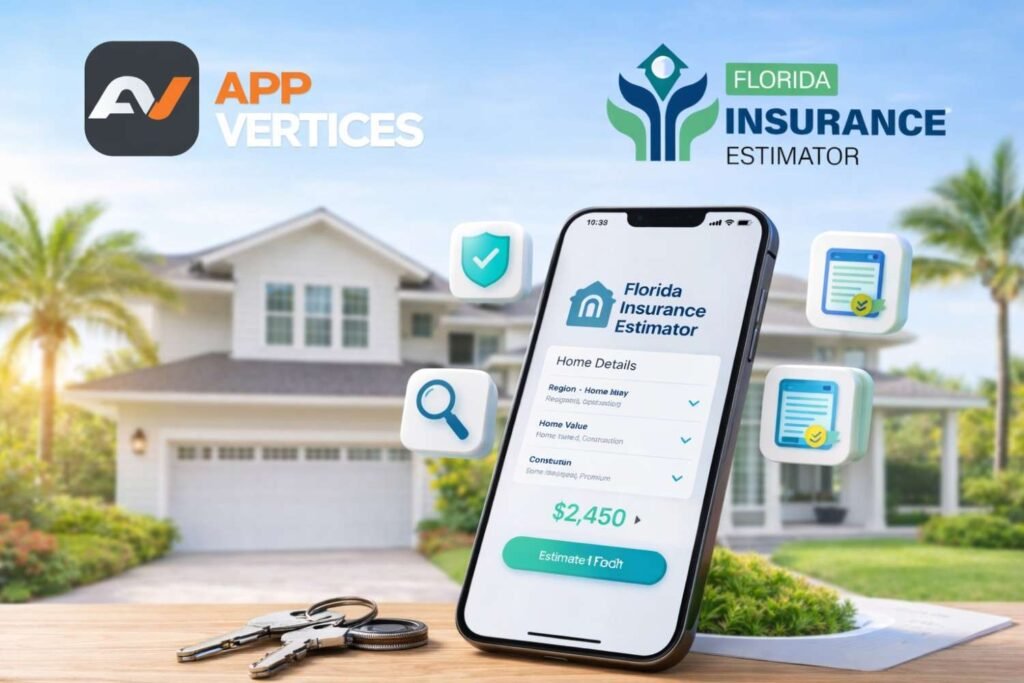
Houston, TX — Understanding home insurance costs has traditionally required time, multiple consultations, and access to fragmented information. However, as digital tools continue to evolve, homeowners are increasingly looking for more direct and accessible ways to explore insurance-related insights. In response to this shift, App Vertices has introduced Florida Insurance Estimator, a mobile application now available on the Apple App Store, designed to simplify how users approach early-stage insurance research. About Florida Insurance Estimator Florida Insurance Estimator is a mobile-based solution developed to help homeowners better understand potential home insurance costs through a guided and user-friendly experience. Rather than replacing formal quotes, the platform focuses on providing estimated insights based on key property inputs. At its core, the app is intended to support the decision-making process by offering a clearer starting point. As a result, users can approach insurance discussions with more context and confidence. Why Choose Florida Insurance Estimator Choosing the right tool for insurance research can make a noticeable difference. While traditional methods often involve delays or incomplete data, this platform offers a more immediate and structured experience. Moreover, it allows users to explore different scenarios by adjusting property-related inputs. This flexibility makes it easier to understand how various factors may influence estimated costs, rather than relying on static or generalized information. Key Features Technology Behind Florida Insurance Estimator The application is built using a modern mobile-first architecture designed for performance and usability. By focusing on streamlined data input and responsive interface design, the platform ensures that users can move through the estimation process without unnecessary friction. In addition, the system is structured to handle variable inputs efficiently, allowing for more dynamic estimation outputs based on user-provided information. This approach supports both speed and adaptability, which are essential for a seamless user experience. Results & Impact Although the application is newly launched, its value lies in how it simplifies an otherwise complex starting point. Instead of navigating multiple sources, users can now access a centralized experience that provides immediate, relevant insights. Consequently, this can reduce the time spent on initial research while also improving overall clarity. Over time, such tools have the potential to reshape how homeowners prepare for insurance-related decisions. Florida Insurance Estimator Addresses These Challenges by Offering: Why Florida Insurance Estimator Stands Out What differentiates this platform is its focus on clarity rather than complexity. Instead of overwhelming users with excessive data, it emphasizes usability and understanding. At the same time, it aligns with how modern users prefer to engage with financial tools—through accessible, mobile-first solutions. This combination of simplicity and functionality makes it a practical option for those beginning their insurance research journey. Case Study: Florida Insurance Estimator Consider a first-time homeowner trying to understand potential insurance costs before purchasing a property. Traditionally, this process would involve reaching out to multiple providers, waiting for responses, and comparing inconsistent information. However, with a tool like Florida Insurance Estimator, that same user can input basic property details and receive an estimated range within minutes. As a result, they gain a clearer understanding of potential costs early on, allowing them to plan more effectively and ask more informed questions later. As digital tools continue to influence how financial decisions are made, accessibility and clarity are becoming increasingly important. Florida Insurance Estimator reflects this shift by offering a more straightforward way to approach one of the more complex aspects of homeownership. Users can explore the app through Florida Insurance Estimator on the App Store, where the experience is designed to be both practical and easy to navigate. For further information or inquiries, users can contact us through the official website. About App Vertices App Vertices is a digital product development company focused on building user-centered applications that simplify complex processes. By combining practical functionality with modern design, the company develops solutions that improve accessibility and usability across various industries.