
Building a Backend for a Mobile App | APIs, Databases, and Hosting
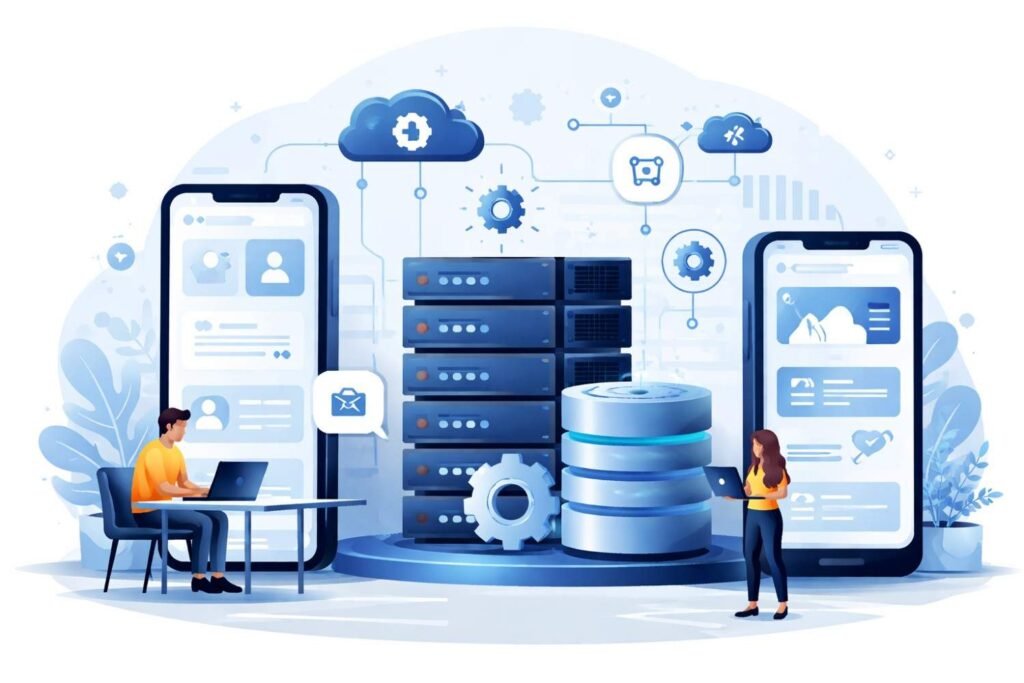
Introduction Mobile applications rarely operate in isolation. Whether it’s a social platform, eCommerce app, fintech solution, or a simple productivity tool, most mobile apps rely on a backend to store data, authenticate users, handle business logic, and communicate securely with devices. A well-designed backend is the foundation that determines how reliable, scalable, and secure a mobile app can become over time. This article offers a comprehensive, end-to-end explanation of how to build a backend for a mobile app. It focuses on APIs, databases, hosting infrastructure, and architectural decisions, helping you understand not just what to build, but why those decisions matter. The goal is education, clarity, and long-term thinking—not promotion or shortcuts. Understanding the Role of a Backend in Mobile Applications A backend is the server-side system that supports a mobile application. While the frontend runs on the user’s device, the backend handles tasks that require persistence, security, and coordination between users. Key responsibilities of a mobile backend include: Without a backend, most apps would be limited to offline or single-device use cases. As soon as you introduce accounts, syncing, payments, or real-time updates, a backend becomes essential. Backend Architecture: How Mobile Apps Communicate with Servers At a high level, mobile apps communicate with backends using a client–server architecture. The mobile app acts as a client that sends requests, and the backend processes those requests and returns responses. Common Communication Models Regardless of the protocol, the backend must be designed with consistency, versioning, and long-term maintenance in mind. Designing APIs for Mobile Backends APIs are the primary interface between a mobile app and its backend. Poor API design leads to fragile apps, excessive network calls, and difficult maintenance. Principles of Good API Design Typical API Responsibilities Backend APIs must be optimized for mobile networks, where latency, bandwidth, and battery usage are real constraints. Authentication and Authorization in Mobile Backends Security is not optional. Authentication determines who a user is, while authorization defines what they can do. Common Authentication Approaches Also, Modern mobile backends are increasingly expected to support intelligent features such as conversational interfaces, task automation, and personalized user experiences. This is where AI-powered components—like chatbots and virtual assistants—interact closely with backend services to process user input, manage context, and retrieve relevant data in real time. For example, productivity-focused iOS applications often rely on backend logic to handle AI requests securely and efficiently, as highlighted in this guide on chatbots for productivity. Integrating such capabilities requires careful API design, scalable processing, and proper data handling to ensure both performance and user trust. Authorization Models A robust backend validates permissions server-side, never trusting the mobile client alone. Choosing the Right Database for a Mobile App Backend Databases are the backbone of data persistence in the backend of mobile apps, and selecting the right type depends on the app’s structure, scale, and data access patterns. Relational Databases Examples: PostgreSQL, MySQL Best suited for: They use schemas and enforce constraints, which can reduce data integrity issues. NoSQL Databases Examples: MongoDB, DynamoDB, Firestore Best suited for: NoSQL databases often trade strict consistency for scalability and performance. Hybrid Approaches Many production backends combine: Database decisions should align with real usage patterns, not trends. Data Modeling and Schema Design Even flexible databases require thoughtful data modeling. Poor schema design leads to performance issues, duplication, and difficult migrations. Key Data Modeling Considerations For mobile apps, optimizing read performance often matters more than write complexity, since most users consume data more than they generate it. Backend Business Logic and Services The backend is responsible for enforcing rules that should never live on the client alone. Examples of backend business logic: Placing logic server-side ensures consistent behavior across platforms, whether the frontend is built using native iOS, Android, or cross-platform frameworks often used in modern cross-platform apps. Hosting and Infrastructure Options Hosting determines how your backend is deployed, scaled, and maintained. Traditional Servers (VMs) Cloud Platforms Serverless Backends Each hosting model involves trade-offs between control, cost, and operational complexity. Scalability Planning from Day One Many mobile apps fail not because of lack of users, but because their backend cannot handle growth. Scalability strategies include: Planning for scalability does not mean over-engineering. It means avoiding architectural decisions that block growth later. Performance Optimization for Mobile Backends Performance directly impacts user retention. Backend optimization techniques: A fast backend improves app responsiveness across both ios apps solutions and android applications, especially on slower mobile networks. Security Best Practices for Mobile App Backends Mobile app backends must be built with security as a core requirement, not an afterthought. Common risks such as insecure authentication, improper access control, data leakage, and insufficient encryption can expose sensitive user information if not handled correctly. Industry-recognized security frameworks help backend teams identify and mitigate these risks early in the development lifecycle. One widely trusted resource is the OWASP Mobile Top 10, which outlines the most critical security vulnerabilities affecting mobile applications and their backends, along with practical mitigation strategies that backend developers can apply during API design, data handling, and infrastructure setup. Essential practices include: Security should be layered, not treated as a single feature. Testing and Quality Assurance Backend testing ensures reliability before users encounter issues. Common testing approaches: Using automated testing workflows minimizes the risk of existing functionality breaking as the backend grows. Monitoring, Logging, and Maintenance Once live, a backend must be observable. Monitoring tools track: Logs help diagnose issues quickly, while alerts prevent downtime from escalating. Maintenance is ongoing, not a one-time task. Supporting Multiple Platforms with a Single Backend One of the backend’s strengths is platform independence. A well-designed backend can serve: This flexibility is critical for teams offering mobile apps in california, where apps often launch across multiple platforms simultaneously. Common Mistakes to Avoid Avoiding such mistakes saves time, cost, and technical debt. Final Thoughts Building a backend for a mobile app is not just about writing server code. It involves architectural planning, API design, data modeling, security, hosting, and long-term scalability. A strong backend empowers mobile apps to grow,